
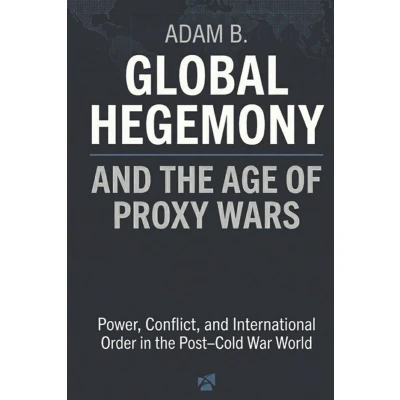
GLOBAL HEGEMONY AND THE AGE OF PROXY WARS: POWER, CONFLICT, INTERNATIONAL ORDER IN POSTCOLD WAR WORLD
Uitgelicht

|
19,82 |
Naar shop
|

|
21,99 |
Naar shop
|
| VERGELIJK ALLE AANBIEDERS (2) | ||
 Beschrijving
Bol
Global Hegemony and the Age of Proxy WarsIn the post-Cold War world, major conflicts are increasingly fought without formal declarations of war.Instead of direct confrontation, global power is exercised through proxy warfare, economic coercion, sanctions regimes, legal interpretation, institutional influence, and information control. These mechanisms shape modern international conflict in ways that are often indirect, deniable, and structurally embedded.Global Hegemony and the Age of Proxy Wars provides a systematic analysis of how these forms of power operate in contemporary geopolitics. A Structural Analysis of Modern ConflictRather than focusing on individual leaders or isolated events, this book examines the underlying systems that generate conflict.Drawing on international relations theory, security studies, and political economy, it explains how global order is shaped through recurring structural incentives rather than unique historical moments.The analysis explores how: - Proxy wars replace direct interstate conflict- Economic sanctions function as instruments of strategic pressure- International law is interpreted through competing power centers- Information and narrative control influence legitimacy and escalation- States manage conflict through deniability and indirect engagement Case Studies of Contemporary Global ConflictTo ground the analysis, the book examines major conflict environments including: - Yugoslavia- Iraq- Syria- Ukraine- GazaThese case studies are used not as isolated events, but as illustrations of systemic patterns in global power competition. A Neutral, System-Focused PerspectiveThis book does not advocate for or against any state, ideology, or alliance.Instead, it focuses on structure over intent, analyzing how the international system itself produces predictable patterns of competition, escalation, fragmentation, and restraint. Key Themes- Global hegemony and shifting power structures- Proxy warfare in modern geopolitics- Hybrid warfare and information systems- Economic coercion and sanctions strategy- Post-Cold War international order- Emergence of a multipolar world system Who This Book Is ForThis book is designed for readers interested in: - International relations and geopolitics- Security studies and strategic analysis- Political economy of conflict- Modern warfare beyond traditional battlefields- Understanding global power dynamics in the 21st centuryIt is intended for scholars, analysts, and informed readers seeking a structured explanation of how modern global conflict actually operates.


 Beschrijving
(1)
Beschrijving
(1)
Global Hegemony and the Age of Proxy WarsIn the post-Cold War world, major conflicts are increasingly fought without formal declarations of war.Instead of direct confrontation, global power is exercised through proxy warfare, economic coercion, sanctions regimes, legal interpretation, institutional influence, and information control. These mechanisms shape modern international conflict in ways that are often indirect, deniable, and structurally embedded.Global Hegemony and the Age of Proxy Wars provides a systematic analysis of how these forms of power operate in contemporary geopolitics. A Structural Analysis of Modern ConflictRather than focusing on individual leaders or isolated events, this book examines the underlying systems that generate conflict.Drawing on international relations theory, security studies, and political economy, it explains how global order is shaped through recurring structural incentives rather than unique historical moments.The analysis explores how: - Proxy wars replace direct interstate conflict- Economic sanctions function as instruments of strategic pressure- International law is interpreted through competing power centers- Information and narrative control influence legitimacy and escalation- States manage conflict through deniability and indirect engagement Case Studies of Contemporary Global ConflictTo ground the analysis, the book examines major conflict environments including: - Yugoslavia- Iraq- Syria- Ukraine- GazaThese case studies are used not as isolated events, but as illustrations of systemic patterns in global power competition. A Neutral, System-Focused PerspectiveThis book does not advocate for or against any state, ideology, or alliance.Instead, it focuses on structure over intent, analyzing how the international system itself produces predictable patterns of competition, escalation, fragmentation, and restraint. Key Themes- Global hegemony and shifting power structures- Proxy warfare in modern geopolitics- Hybrid warfare and information systems- Economic coercion and sanctions strategy- Post-Cold War international order- Emergence of a multipolar world system Who This Book Is ForThis book is designed for readers interested in: - International relations and geopolitics- Security studies and strategic analysis- Political economy of conflict- Modern warfare beyond traditional battlefields- Understanding global power dynamics in the 21st centuryIt is intended for scholars, analysts, and informed readers seeking a structured explanation of how modern global conflict actually operates.
 Productspecificaties
 Prijshistorie
* Prijshistorie bevat geen data van Amazon.
Prijzen voor het laatst bijgewerkt op:
 Gerelateerde resultaten


