

€ 20,43 Gratis verzending

Uitgelicht
|
|
20,43 |
Naar shop
|

|
20,43 |
Naar shop
|

|
22,00 |
Naar shop
|
| VERGELIJK ALLE AANBIEDERS (3) | ||
 Beschrijving
Vergelijk aanbieders (3)
€ 20,43 Gratis verzending
€ 20,43 Gratis verzending
€ 22,00 € 2,99 verzendkosten Totaal € 24,99
Winkels met andere maten
Beschrijving
(1)
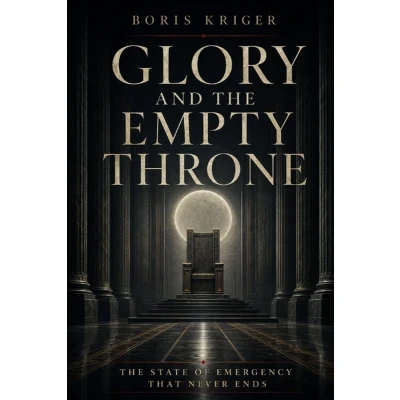
The emergency was supposed to be temporary. That was the whole idea of it. Something terrible happens, the ordinary rules are set aside for a while, and then the rules come back. Somewhere along the way the second half of that sentence quietly stopped happening. Giorgio Agamben has spent thirty years arguing that this is not a malfunction of modern government but its operating principle - that the exception has become the rule, that the camp rather than the city is the true model of our political space, and that power exists to strip human beings down to the bare fact of being alive. He is eighty-four, still writing, and more widely read than any living political philosopher. He is also, in one crucial respect, standing on a single obscure sentence written by a Roman grammarian about a legal category almost nobody understood even at the time. This book takes the diagnosis apart to find out which parts hold. It separates what Agamben measured from what he declared, and finds that his most alarming claim - the permanent emergency - survives perfectly well without the foundations he built for it, while nine celebrated volumes turn out to descend from a single idea wearing nine costumes. Agreement with history, repeated nine times, is not nine confirmations. It is one, reported often. Then comes the harder question. Agamben inherited from Carl Schmitt a sovereign who decides. But in the catastrophes that actually occur, nobody decides. Deliberation takes longer than the window allows, the slack runs out, a ratchet closes, and the result lands outside anything anyone intended. Meanwhile power orients itself not to the will of the people - a quantity nobody has ever succeeded in measuring - but to a colder question: how expensive would it be to remove us? The picture that emerges is bleaker than Agamben's, because a sovereign at least has a name and an address. A ratchet has neither. But it is also, unlike his, a picture with something you can act on: the cost of removing a government can be measured, it varies enormously between countries, and that variation is the difference between famine and no famine, between a bad decade and a mass grave. Written with wit, irreverence, and an unusual respect for the difference between evidence and eloquence, this is a book about how to disagree with a great thinker while keeping everything he got right. Keywords: political philosophy, state of exception, biopolitics, sovereignty, democracy, Giorgio Agamben, power
 Prijshistorie
 * Prijshistorie bevat geen data van Amazon, Amazon Marketplace.
Prijzen voor het laatst bijgewerkt op:
 Gerelateerde resultaten
 Productspecificaties


