

€ 28,99 Gratis verzending

Uitgelicht
|
|
28,99 |
Naar shop
|

|
28,99 |
Naar shop
|

|
30,00 |
Naar shop
|
| VERGELIJK ALLE AANBIEDERS (3) | ||
 Beschrijving
Vergelijk aanbieders (3)
€ 28,99 Gratis verzending
€ 28,99 Gratis verzending
€ 30,00 Gratis verzending
Winkels met andere maten
Beschrijving
(1)
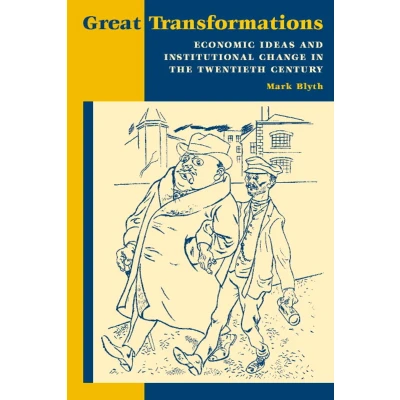
This book analyses political and economic change in the United States and Sweden from the 1920s to the end of the 1990s. The key claim is that economic ideas are political tools used by domestic groups in order to effect change. This book picks up where Karl Polanyi's study of economic and political change left off. Building upon Polanyi's conception of the double movement, Blyth analyzes the two periods of deep seated institutional change that characterized the twentieth century: the 1930s and the 1970s. Blyth views both sets of changes as part of the same dynamic. In the 1930s labor reacted against the exigencies of the market and demanded state action to mitigate the market's effects by 'embedding liberalism.' In the 1970s, those who benefited least from such 'embedding' institutions, namely business, reacted against these constraints and sought to overturn that institutional order. Blyth demonstrates the critical role economic ideas played in making institutional change possible. Great Transformations rethinks the relationship between uncertainty, ideas, and interests, achieving profound new insights on how, and under what conditions, institutional change takes place.
 Prijshistorie
 * Prijshistorie bevat geen data van Amazon, Amazon Marketplace.
Prijzen voor het laatst bijgewerkt op:
 Gerelateerde resultaten
 Productspecificaties


