

€ 10,98 Gratis verzending

Uitgelicht
|
|
10,98 |
Naar shop
|

|
10,98 |
Naar shop
|

|
11,50 |
Naar shop
|
| VERGELIJK ALLE AANBIEDERS (3) | ||
 Beschrijving
Vergelijk aanbieders (3)
€ 10,98 Gratis verzending
€ 10,98 Gratis verzending
€ 11,50 € 2,99 verzendkosten Totaal € 14,49
Winkels met andere maten
Beschrijving
(1)
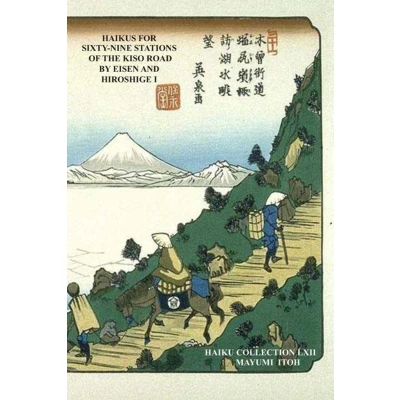
This bilingual haiku anthology features Kiso kaidō rokujūkyū tsugi (Sixty-nine Stations of the Kiso Road, 1835-1837), a masterpiece ukiyo-e woodblock print series by Keisai Eisen (1791-August 1848) and Utagawa Hiroshige (1797-October 1858). Eisen is considered one of the four great ukiyo-e artists of bijin-ga (paintings of beautiful women), along with Kitagawa Utamaro (c. 1753-October 1806), Torii Kiyonaga (1752-May 1815), and Utagawa Kunisada (June 1786-January 1865). In turn, Hiroshige is known for world-famous ukiyo-e woodblock print series, such as Tōkaidō gojū-san tsugi(The Fifty-three Stations of the Tōkaidō Road, 1833-1834) and Meisho Edo hyakkei (One Hundred Famous Scenes of Edo, 1856-1858). Both Eisen and Hiroshige caused a sensation in the French art world in the late 19th century so that 'Japonism' became a source of inspiration for many Impressionist and Post-Impressionist painters, including Vincent van Gogh (1853-1890). This ukiyo-e woodblock series was first published solely by Hōeidō, owned by Takenouchi Magohachi (Ukiyo-e artist name, Takenouchi Bizan, 1781-August 1854), then it became a joint publication by Hōeidō and Kinjudō of Iseriya Rihē (?-?), who later gained the sole rights to publish this series and completed it. Depending on these two publishers, Eisen and Hiroshige took turns in painting this series. In the end, Eisen painted 24 prints out of a total of 71 prints, while Hiroshige painted 47 prints. By a strict definition, "Kiso Road" was actually part of the Nakasendō Road, which was one of the Five Major Roads established by the Tokugawa shogunate government in 1601. While both the Tōkaidō Road and the NakasendōRoad started from Nihonbashi, Edo (current Tokyo), and ended with the Sanjō Bridge in Kyoto, the former mostly took the coastal route on the Pacific Ocean, whereas the latter took a mountainous route, with many dangerous mountain passes and rapid rivers to cross. The Nakasendō Road encompassed seven provinces (current prefectures of Tokyo, Saitama, Gunma, Nagano, Gifu, Shiga, and Kyoto). >* * * This new haiku collection (2026) presents 36 original haikus, out of the total of 71 ukiyo-e woodblock prints in Kiso kaidōrokujūkyū tsugi (Sixty-nine Stations of the Kiso Road, 1835-1837) by Eisen and Hiroshige, as a homage, along with appropriate season words per the Japanese calendar and annotations. It's time to admire the beautiful scenes and spectacular views of the sixty-nine stations on the Kiso Road (Nakasendō Road).
 Prijshistorie
 * Prijshistorie bevat geen data van Amazon, Amazon Marketplace.
Prijzen voor het laatst bijgewerkt op:
 Gerelateerde resultaten
 Productspecificaties


