

€ 10,45 Gratis verzending

Gesponsorde links
|
|
10,45 |
Naar shop
|

|
10,45 |
Naar shop
|

|
13,50 |
Naar shop
|
| VERGELIJK ALLE AANBIEDERS (3) | ||
 Beschrijving
Vergelijk aanbieders (3)
Gesponsorde links · Sommige shops betalen ons een vergoeding
€ 10,45 Gratis verzending
€ 10,45 Gratis verzending
€ 13,50 € 2,99 verzendkosten Totaal € 16,49
Winkels met andere maten
Beschrijving
(1)
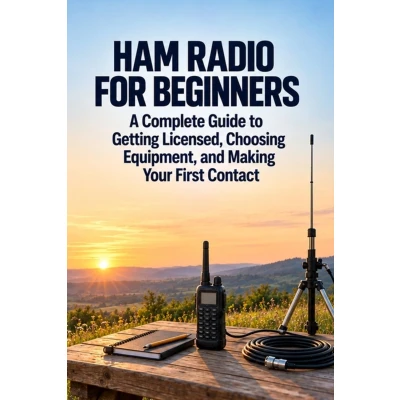
Get from "I'm curious about ham radio" to your first call on the air with a clear, illustrated guide written for beginners. This book follows the real path: learn how radio works, study for the license exam, choose your first radio, set up and program it, and make your first contact. Every lesson has a drawing or table inside it, and the book is full of practice you can do before you ever press the push-to-talk button. What is inside: - 58 lessons with 248 drawn figures and 64 tables - What amateur radio is, the bands, who regulates it and how the ham community works - How radio works in plain words: waves and wavelength, line of sight, HF skywave, decibels, modes, repeaters, antennas and SWR - The US license path: Technician, General and Extra, the exam format, a four-week study plan, finding and taking the exam, your FCC registration number, your call sign and renewal - A short guide to licensing in the United Kingdom, Canada and other countries - Rules and safety: station identification, what you may and may not do, RF exposure, electrical and antenna safety, lightning and grounding - Choosing equipment: handhelds, mobile radios, features, budgets, buying used and the mistakes to avoid - Antennas and feedlines: dipoles, ground planes, J-poles, Yagis, coax, connectors, tuners and SWR - Building your station: layout, power, grounding, cable routing, mobile installation and a go-kit - Operating basics: controls, memories, repeaters, offsets and tones, simplex, nets and programming your radio - Your first contact: scripts, phonetics, microphone technique, logging and QSL cards - Beyond the first contact: HF, Morse code basics, FT8, APRS, satellites, portable operating, storm spotting and emergency communication - Exam primer with ten topic reviews and 50 original practice questions - 10 band profiles, 12 guided steps to program your first handheld and 30 short answers to questions beginners ask - 30 practice calls, 12 worked calculations, 16 troubleshooting cases and 12 buying scenarios >Written mainly for readers in the United States. Rules, fees, exam content and frequency privileges change, so check the FCC rules (47 CFR Part 97), the current question pool and your volunteer examiner coordinator before you study, test or transmit. Call signs, names and places in the examples are fictitious, and equipment prices are typical ranges that vary. Ideal for new and prospective hams, teenagers and adults preparing for the Technician exam, scouts and club members, families, and anyone who wants to understand the radio before buying one.
 Prijshistorie
* Prijshistorie bevat geen data van Amazon, Amazon Marketplace.
Prijzen voor het laatst bijgewerkt op:
 Gerelateerde resultaten
 Productspecificaties


