


€ 0,99 Gratis verzending

Uitgelicht
|
|
0,99 |
Naar shop
|
| VERGELIJK ALLE AANBIEDERS (1) | ||
 Beschrijving
Vergelijk aanbieders (1)
€ 0,99 Gratis verzending
Winkels met andere maten
Beschrijving
(1)
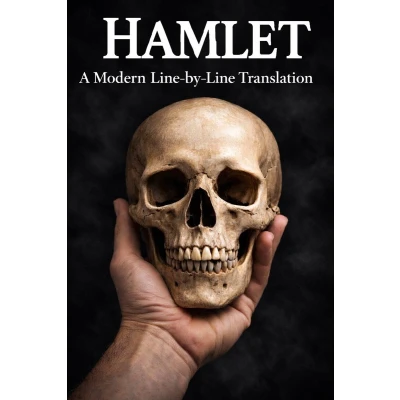
A modern English translation of Shakespeare's 'Hamlet' presented alongside the original text. Over 500 explanatory notes give extra insight into the play's rich meaning. This edition is ideal for higher-level students of Shakespeare as well as for the casual reader. Unlike other modern translations such as Sparknotes this edition uses no paraphrasing of multiple lines into single modernised lines and its number of explanatory notes far exceeds most other editions. No stone is left unturned as every single line has its modern English translation underneath that is highly faithful to the original. Hamlet, prince of Denmark, must seek revenge against his uncle Claudius for the murder of his father, King Hamlet, whose ghost returns to earth to reveal the crime. Torn between doubtful introspection and his duty to act, Hamlet is thrown into seeming madness and his plan for vengeance is ruptured by the tragic forces of fate. From the heights of philosophical eloquence to the depths of bloody violence, the play pulls the audience with it on its journey through the life and mind of one of Shakespeare's greatest and most complex characters. Suitable for all levels of reading up to and including university level close readings. This translation offers far more detail and precise translation than other modernised versions, such as those provided by Sparknotes, LitCharts, and similar resources which all tend to give only gist translations. This edition translates every unfamiliar word , maintains original word and sentence orders, does not give vague or generalised translations of the text, and provides a wealth of explanatory notes that exceeds most other editions of the text. Both the original text and its modernised translation are entirely in English. BELOW IS AN EXCERPT FROM THE BOOK WITH THE MODERN ENGLISH IN BOLD: To be, or not to be- that is the question: To be, or not to be - that is the question: Whether 'tis nobler in the mind to suffer Whether it is nobler¹ in one’s mind to suffer The slings and arrows of outrageous fortune The stones slung and arrows thrown by changing fortune Or to take arms against a sea of troubles, Or to fight against life’s sea of troubles, And by opposing end them. To die- to sleep- And in fighting them they are ended by ending life. To die - to sleep - No more;² and by a sleep to say we end To die is no more than to sleep; and by a sleep that is to say we end The heartache, and the thousand natural shocks The heartache, and the thousand mortal injuries That flesh is heir to. 'Tis a consummation That living bodies all inherit at birth. It is a complete ending Devoutly to be wish'd. To die- to sleep. Earnestly to be desired. To die - to sleep. To sleep- perchance to dream: ay, there's the rub!³ To sleep - perhaps to dream: ah yes, there's the problem! For in that sleep of death what dreams may come For in that sleep of death what dreams may come When we have shuffled off this mortal coil, When we have thrown off the trouble of mortal existence, Must give us pause. There's the respect Must make us hesitate. There's the consideration That makes calamity of so long life.⁴ That makes tragedy of such a long life. For who would bear the whips and scorns of time, For what man would bear the pains and taunts that come with time, Th' oppressor's wrong, the proud man's contumely, The oppressor's injustice, the arrogant man's insults, The pangs of despis'd love, the law's delay, The pains of rejected love, the delay of justice, The insolence of office, and the spurns The contempt of the powerful, and the disrespect That patient merit of th' unworthy takes, That people of patient goodness from people unworthy of praise receive,
 Productspecificaties
| EAN |
|
|---|---|
| Maat |
|
 Prijshistorie
 Prijzen voor het laatst bijgewerkt op:
 Gerelateerde resultaten


