


€ 119,00 Gratis verzending

Uitgelicht
|
|
119,00 |
Naar shop
|

|
152,37 |
Naar shop
|
| VERGELIJK ALLE AANBIEDERS (2) | ||
 Beschrijving
Vergelijk aanbieders (2)
€ 119,00 Gratis verzending
€ 152,37 Gratis verzending
Winkels met andere maten
Beschrijving
(1)
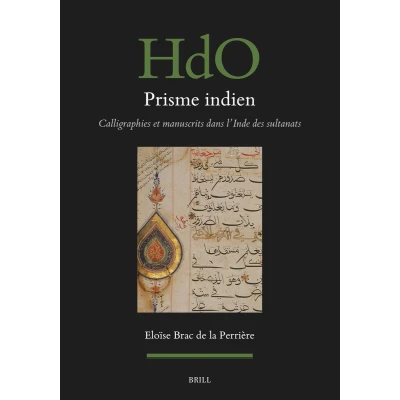
Premier ouvrage d’histoire de l’art consacré aux manuscrits coraniques du sous-continent indien, ce livre pionnier met en lumière un corpus longtemps négligé, exceptionnel par son ampleur et par la continuité de sa production, depuis l’époque des sultanats jusqu’à la période moderne. En adoptant une approche novatrice fondée sur l’analyse des formes embellies de l'écriture, et plus particulièrement de l’une d’entre elles, la calligraphie bihari, cette étude inédite interroge les systèmes de pensée, les dynamiques sociales et les réseaux d’interactions humaines qui ont présidé à la création de tels objets. Une contribution essentielle à l’histoire matérielle et culturelle des arts dans l’Inde médiévale et moderne. Cet ouvrage a bénéficié du soutien financier de l'Agence Nationale de la Recherche (ANR) au titre du projet «Calligraphies en caractères arabes dans les zones frontières du monde islamique (CallFront)» (ANR-22-CE54-0015). Ouvrage publié avec le soutien de l'Institut national d'histoire de l'art. This is the first art history book dedicated to Quranic manuscripts from the Indian subcontinent. This pioneering work highlights a long neglected corpus, exceptional for its scale and the continuity of its production, from the sultanate period to the modern era. By adopting an innovative approach based on the analysis of embellished forms of writing, and more specifically one of them, Bihari calligraphy, this unprecedented study examines the systems of thought, social dynamics, and networks of human interactions that governed the creation of such objects. This book is an essential contribution to the material and cultural history of the arts of medieval and modern India. This work received financial support from l'Agence Nationale de la Recherche (ANR) through the project "Calligraphies en caractères arabes dans les zones frontières du monde islamique (CallFront)" (ANR-22-CE54-0015). This work is published with the support of the Institut national d'histoire de l'art (INHA).
 Prijshistorie
 * Prijshistorie bevat geen data van Amazon.
Prijzen voor het laatst bijgewerkt op:
 Gerelateerde resultaten
 Productspecificaties


