


€ 129,00 Gratis verzending

Uitgelicht
|
|
129,00 |
Naar shop
|

|
138,85 |
Naar shop
|

|
138,85 |
Naar shop
|
| VERGELIJK ALLE AANBIEDERS (3) | ||
 Beschrijving
Vergelijk aanbieders (3)
€ 129,00 Gratis verzending
€ 138,85 Gratis verzending
€ 138,85 Gratis verzending
Winkels met andere maten
Beschrijving
(1)
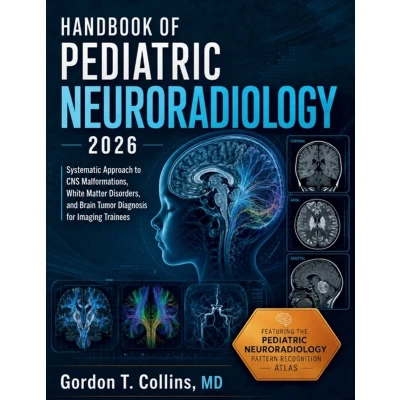
You are standing at the lightbox, a child's brain on the screen, a family in the waiting room, and the answer has to come from you. No adult pattern recognition will save you here - the developing brain operates by different rules, fails in different ways, and demands an entirely different interpretive framework than anything you learned on general neuroradiology. This handbook builds the age-calibrated, pattern-locked clinical reasoning that transforms how you interpret every pediatric neuroimaging study from the neonatal period through adolescence. - Age-first interpretive framework - apply the five-step developmental assessment that prevents misreading physiological myelination, normal variants, and age-appropriate anatomy as pathology - Pattern Recognition Atlas - consult the back-of-book indexed system cross-referencing every named pattern by anatomical region, MRI signal signature, and patient age band for instant point-of-care retrieval - Posterior fossa tumor decision logic - distinguish medulloblastoma from ependymoma from DIPG from pilocytic astrocytoma at the moment of image review, before the surgical team calls - Neonatal brain injury framework - map HIE severity patterns, neonatal AIS, hypoglycemic injury, and sinovenous thrombosis using sequence-specific DWI and ADC criteria - Abusive head trauma reporting - document imaging findings with forensic precision, apply evidence-based mechanical inconsistency criteria, and withstand medicolegal scrutiny - Leukodystrophy pattern recognition - use distribution, FLAIR behavior, and MRS metabolite signatures to narrow the white matter disorder differential before genetics returns >This handbook is written for pediatric radiology fellows, neuroradiology fellows, general radiologists who image children, pediatric neurologists, neurosurgeons, and any clinician whose decisions depend on getting the pediatric neuroimaging interpretation right.
 Prijshistorie
 * Prijshistorie bevat geen data van Amazon, Amazon Marketplace.
Prijzen voor het laatst bijgewerkt op:
 Gerelateerde resultaten
 Productspecificaties


