


€ 34,50 Gratis verzending

Uitgelicht
|
|
34,50 |
Naar shop
|

|
41,30 |
Naar shop
|
| VERGELIJK ALLE AANBIEDERS (3) | ||
 Beschrijving
Vergelijk aanbieders (3)
€ 34,50 Gratis verzending

€ 34,50 Gratis verzending
gebruikt € 41,30 Gratis verzending
Winkels met andere maten
Beschrijving
(3)
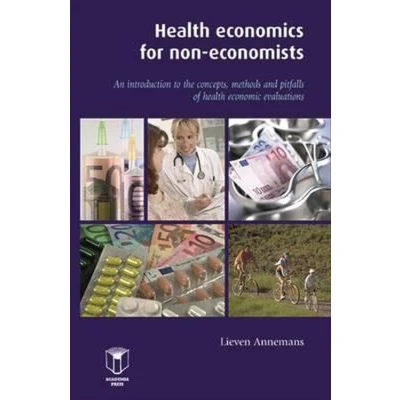
All too often, economics is seen as a synonym for savings and financial pressure. However, what it really aims to do is find the best possible way to spend the available financial means. In order to apply economicthinking to healthcare, Annemans argues, the health sector should be viewed as a productive sector whose aim is to produce health, by ensuring that people live longer and more healthily. As 'productive' goes hand in hand with 'productivity', society must try to gain as much health as possible with the available means. Therefore, priority must be given to interventions (both preventive and curative) which result in the greatest amount of health for the money that is invested. These choices can be made by means of health economicevaluation. Hence, the second goal of this book is to explore the methods of health economic evaluation and explain them. Non-economists are frequently confronted with the results of such evaluations, for example in articles in medical journals, but often ignore them because they are not familiar with the terminology and techniques. This book aims to equip non-economists with enough knowledge to participate in the choicesthat are made in health care.
StumpelThe goal of this book is to make the reader familiar with the principles and methods of health economics evaluations.Health economics is about making wise investments in health and healthcare. Health economics evaluations are a particular domain of health economics. They help to make choices and to give priority to interventions (for prevention, diagnosis, cure or care) which result in the greatest amount of health per invested unit of money. The results of health economics evaluations are increasingly published in scientific journals, presented at congresses and used in policy making. This book helps all stakeholders in health and healthcare to understand the methods and interpret the results of these evaluations. After a successful first edition (2008) this second edition provides several recent examples, explains the relationship between health economics evaluations and health technology assessment (HTA), and focusses especially on the pitfalls of health economics evaluations and how to overcome these. Knowledge about economics is not required.
BolHealth economics is about making wise investments in health and health care. The purpose of this book is to make readers familiar with the principles, methods and pitfalls of health economic evaluations. These evaluations help to make choices and set priorities in favour of those investments (for prevention, diagnosis, cure or care) that give the greatest return on health for money spent. The results of these evaluations are increasingly a subject of focus and discussion in scientific journals, at congresses and in health policy making. This book will help everyone who is involved in health and health care to understand the methods used in these evaluations and to interpret their results. In this second edition, with numerous recent examples, attention is also given to relatively new methods (including methods to measure quality of life) and a number of unavoidable trends (such as the use of real world evidence). Readers do not need a basic knowledge of economics.
 Productspecificaties
| EAN |
|
|---|---|
| Maat |
|
 Prijshistorie
 Prijzen voor het laatst bijgewerkt op:
 Gerelateerde resultaten


