

€ 87,67 € 3,14 verzendkosten Totaal € 90,81

Uitgelicht
|
|
87,67 |
Naar shop
|

|
125,00 |
Naar shop
|
| VERGELIJK ALLE AANBIEDERS (2) | ||
 Beschrijving
Vergelijk aanbieders (2)
€ 87,67 € 3,14 verzendkosten Totaal € 90,81
€ 125,00 Gratis verzending
Winkels met andere maten
Beschrijving
(1)
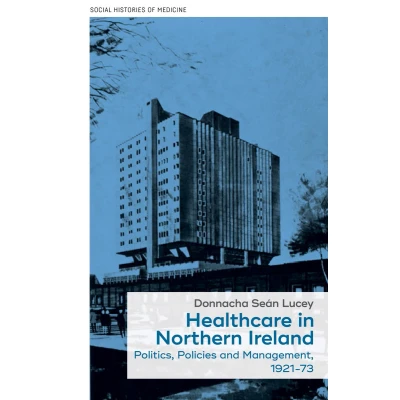
This book provides insights into the politics, policies and management of healthcare in Northern Ireland from Irish partition in 1921 to the reorganisation of the services in 1973. It covers the interwar era, reforms of the 1940s, and creation and operation of the National Health Service, especially the Northern Ireland Hospitals Authority. Northern Ireland’s modern health services have long been characterised by an unusually high degree of managerialism and centralised government authority. While Northern Ireland’s overly centralised health system is a modern-day policy concern, there is little understanding of its long-term, historical development. This book focuses on the policies, politics and management of healthcare in Northern Ireland from 1921 to 1973. This period witnessed a complete transformation of Northern Ireland’s health services, evolving from a highly fragmented system – characterised by differentiated providers and weak centralisation – to the most integrated and centrally managed of the United Kingdom’s three NHS systems. The volume examines the long-term trajectory of this change. At the core of this analysis is an exploration of the interest groups that were progenitors of change, or, conversely, strongly resisted reform. These included medical professionals, hospitals, medical voluntarism, local interests, central government and political and religious groupings. Overall, a picture of involuntary change is depicted, in which conflict and tensions between the ruling Ulster Unionist Party and multiple stakeholders are posited as central to shaping Northern Ireland’s healthcare. The book sheds new light on interwar Northern Irish healthcare, the coming of the welfare state and the relationship between health and politics. This includes nationalist disenchantment and the fragmentation of unionist health policy in the lead up to the Troubles. It identifies health policy as a divisive plank of the modernising, technocratic and managerialist policies of the Terence O’Neill administration in the 1960s. The book offers original insights into this key juncture in Northern Irish politics and history. This book examines the policies, politics, and management of health care in Northern Ireland from 1921 to 1973, tracing its evolution from a fragmented, locally driven system to the most centrally managed model within the National Health Service. At its core is an analysis of the interest groups that championed change or resisted reform. It explores poor law, municipal, and voluntary provision in the interwar years, then considers the 1940s, shaped by wartime experience and Northern Ireland’s reluctant adoption of the welfare state. The discussion of the post-war decades highlights the complex relationship between health and politics and shows how the technocratic and managerialist reforms of the Terence O’Neill administration fractured unionist health policy in the years leading to the Troubles. Overall, the book offers original insights into Northern Ireland’s health care, politics, and modern history.
 Prijshistorie
 * Prijshistorie bevat geen data van Amazon.
Prijzen voor het laatst bijgewerkt op:
 Gerelateerde resultaten
 Productspecificaties


