
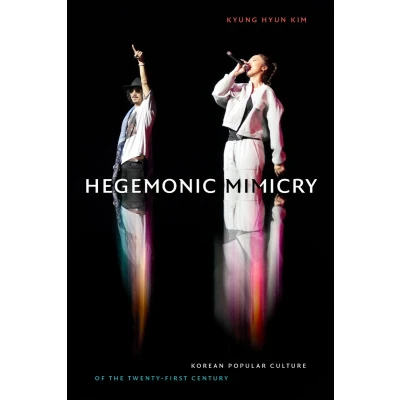
Hegemonic Mimicry
Uitgelicht

|
27,99
25,73 |
Naar shop
|

|
30,22 |
Naar shop
|
| VERGELIJK ALLE AANBIEDERS (2) | ||
 Beschrijving
Bol
In Hegemonic Mimicry, Kyung Hyun Kim considers the recent global success of Korean popular culture-the Korean wave of pop music, cinema, and television, which is also known as hallyu-from a transnational and transcultural perspective. Using the concept of mimicry to think through hallyu's adaptation of American sensibilities and genres, he shows how the commercialization of Korean popular culture has upended the familiar dynamic of major-to-minor cultural influence, enabling hallyu to become a dominant global cultural phenomenon. At the same time, its worldwide popularity has rendered its Koreanness opaque. Kim argues that Korean cultural subjectivity over the past two decades is one steeped in ethnic rather than national identity. Explaining how South Korea leaped over the linguistic and cultural walls surrounding a supposedly “minor” culture to achieve global ascendance, Kim positions K-pop, Korean cinema and television serials, and even electronics as transformative acts of reappropriation that have created a hegemonic global ethnic identity.


 Beschrijving
(1)
Beschrijving
(1)
In Hegemonic Mimicry, Kyung Hyun Kim considers the recent global success of Korean popular culture-the Korean wave of pop music, cinema, and television, which is also known as hallyu-from a transnational and transcultural perspective. Using the concept of mimicry to think through hallyu's adaptation of American sensibilities and genres, he shows how the commercialization of Korean popular culture has upended the familiar dynamic of major-to-minor cultural influence, enabling hallyu to become a dominant global cultural phenomenon. At the same time, its worldwide popularity has rendered its Koreanness opaque. Kim argues that Korean cultural subjectivity over the past two decades is one steeped in ethnic rather than national identity. Explaining how South Korea leaped over the linguistic and cultural walls surrounding a supposedly “minor” culture to achieve global ascendance, Kim positions K-pop, Korean cinema and television serials, and even electronics as transformative acts of reappropriation that have created a hegemonic global ethnic identity.
 Productspecificaties
 Prijshistorie
* Prijshistorie bevat geen data van Amazon.
Prijzen voor het laatst bijgewerkt op:
 Gerelateerde resultaten


