
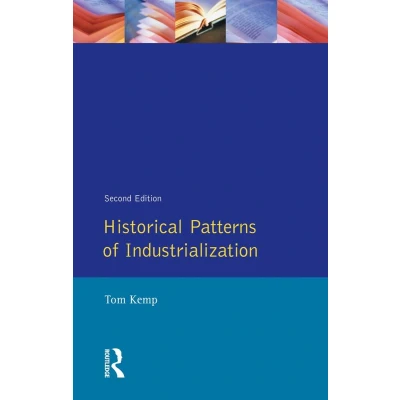
Historical Patterns of Industrialization
Uitgelicht

|
91,67 |
Naar shop
|
| VERGELIJK ALLE AANBIEDERS (1) | ||
 Beschrijving
Bol
Industrialization is still the factor that distinguishes the modern world from the past, and advanced countries from undeveloped ones. In this revised and expanded edition, Tom Kemp uses the historical record of industrialization to explore key questions about its impact and the significance we assign to it. The book adopts a thematic approach to examine the roles of technology, banking, transport and the state; the fate of the peasantry in an industrializing society; and the changing features of industrial capitalism in the latter part of the 19th century. It features four contrasted case studies from outside Europe - India, Canada, Japan and, for the first time in this second edition, South Africa. It is aimed at 1st year University/Polytechnic students and is suitable for courses in economic history, social history, development studies, applied economics, international economics and area studies.


Vergelijk aanbieders (1)

 Beschrijving
(1)
Beschrijving
(1)
Industrialization is still the factor that distinguishes the modern world from the past, and advanced countries from undeveloped ones. In this revised and expanded edition, Tom Kemp uses the historical record of industrialization to explore key questions about its impact and the significance we assign to it. The book adopts a thematic approach to examine the roles of technology, banking, transport and the state; the fate of the peasantry in an industrializing society; and the changing features of industrial capitalism in the latter part of the 19th century. It features four contrasted case studies from outside Europe - India, Canada, Japan and, for the first time in this second edition, South Africa. It is aimed at 1st year University/Polytechnic students and is suitable for courses in economic history, social history, development studies, applied economics, international economics and area studies.
 Productspecificaties
| EAN |
|
|---|---|
| Maat |
|
 Prijshistorie
Prijzen voor het laatst bijgewerkt op:
 Gerelateerde resultaten


