
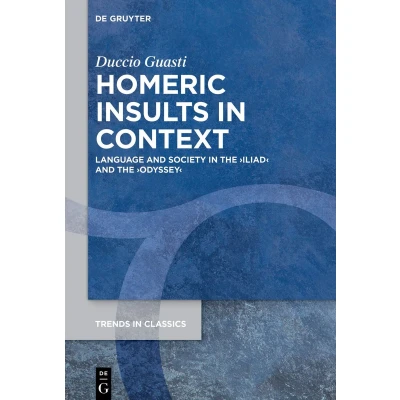
Homeric Insults in Context: Language and Society the ›Iliad‹ ›Odyssey‹: 206
Uitgelicht

|
98,99 |
Naar shop
|

|
98,99 |
Naar shop
|

|
109,95 |
Naar shop
|
| VERGELIJK ALLE AANBIEDERS (3) | ||
 Beschrijving
Bol
Why does Helen call herself “chilling,” “horrid,” and “dog-faced,” in situations where no one is blaming her? Why does Agamemnon accuse Odysseus of greed and enjoyment of wine without an apparent reason? Why do warriors in the Iliad exchange long lines of reciprocal accusations before fighting, instead of concentrating on the battle? Why is Paris called “archer” as an insult, while other characters of the Iliad are praised for their prowess with the bow? These long-standing issues can be solved only if seen as part of the larger question of what role insults play in Homer’s world.This book concentrates on the various words that are used as insults in the two poems, with particular attention to the context in which they are used, not only in order to determine their individual meaning, but also to investigate the spoken and unspoken rules of Homeric society.The result is a new portrait of the Homeric man (and woman), his values, his priorities, his sense of chivalry, as well as of the audience the poems were composed for and the society in which they lived. Winner of the Trends in Classics Book Prize 2025


 Beschrijving
(1)
Beschrijving
(1)
Why does Helen call herself “chilling,” “horrid,” and “dog-faced,” in situations where no one is blaming her? Why does Agamemnon accuse Odysseus of greed and enjoyment of wine without an apparent reason? Why do warriors in the Iliad exchange long lines of reciprocal accusations before fighting, instead of concentrating on the battle? Why is Paris called “archer” as an insult, while other characters of the Iliad are praised for their prowess with the bow? These long-standing issues can be solved only if seen as part of the larger question of what role insults play in Homer’s world.This book concentrates on the various words that are used as insults in the two poems, with particular attention to the context in which they are used, not only in order to determine their individual meaning, but also to investigate the spoken and unspoken rules of Homeric society.The result is a new portrait of the Homeric man (and woman), his values, his priorities, his sense of chivalry, as well as of the audience the poems were composed for and the society in which they lived. Winner of the Trends in Classics Book Prize 2025
 Productspecificaties
 Prijshistorie
* Prijshistorie bevat geen data van Amazon, Amazon Marketplace.
Prijzen voor het laatst bijgewerkt op:
 Gerelateerde resultaten


