
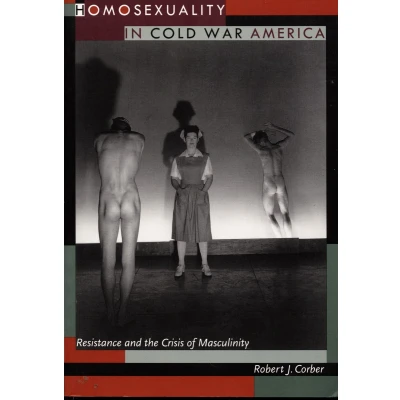
Homosexuality in Cold War America
Uitgelicht

|
19,95 |
Naar shop
|
| VERGELIJK ALLE AANBIEDERS (1) | ||
 Beschrijving
Bol Partner
Suitable for a range of readers, including students and scholars in the fields of American literature, film, and gay studies, this book challenges widely held assumptions about postwar gay male culture and politics. Challenging widely held assumptions about postwar gay male culture and politics, Homosexuality in Cold War America examines how gay men in the 1950s resisted pressures to remain in the closet. Robert J. Corber argues that a form of gay male identity emerged in the 1950s that simultaneously drew on and transcended left-wing opposition to the Cold War cultural and political consensus. Combining readings of novels, plays, and films of the period with historical research into the national security state, the growth of the suburbs, and postwar consumer culture, Corber examines how gay men resisted the "organization man" model of masculinity that rose to dominance in the wake of World War II. By exploring the representation of gay men in film noir, Corber suggests that even as this Hollywood genre reinforced homophobic stereotypes, it legitimized the gay male "gaze." He emphasizes how film noir’s introduction of homosexual characters countered the national "project" to render gay men invisible, and marked a deep subversion of the Cold War mentality. Corber then considers the work of gay male writers Tennessee Williams, Gore Vidal, and James Baldwin, demonstrating how these authors declined to represent homosexuality as a discrete subculture and instead promoted a model of political solidarity rooted in the shared experience of oppression. Homosexuality in Cold War America reveals that the ideological critique of the dominant culture made by gay male authors of the 1950s laid the foundation for the gay liberation movement of the following decade.


Vergelijk aanbieders (1)

 Beschrijving
(1)
Beschrijving
(1)
Suitable for a range of readers, including students and scholars in the fields of American literature, film, and gay studies, this book challenges widely held assumptions about postwar gay male culture and politics. Challenging widely held assumptions about postwar gay male culture and politics, Homosexuality in Cold War America examines how gay men in the 1950s resisted pressures to remain in the closet. Robert J. Corber argues that a form of gay male identity emerged in the 1950s that simultaneously drew on and transcended left-wing opposition to the Cold War cultural and political consensus. Combining readings of novels, plays, and films of the period with historical research into the national security state, the growth of the suburbs, and postwar consumer culture, Corber examines how gay men resisted the "organization man" model of masculinity that rose to dominance in the wake of World War II. By exploring the representation of gay men in film noir, Corber suggests that even as this Hollywood genre reinforced homophobic stereotypes, it legitimized the gay male "gaze." He emphasizes how film noir’s introduction of homosexual characters countered the national "project" to render gay men invisible, and marked a deep subversion of the Cold War mentality. Corber then considers the work of gay male writers Tennessee Williams, Gore Vidal, and James Baldwin, demonstrating how these authors declined to represent homosexuality as a discrete subculture and instead promoted a model of political solidarity rooted in the shared experience of oppression. Homosexuality in Cold War America reveals that the ideological critique of the dominant culture made by gay male authors of the 1950s laid the foundation for the gay liberation movement of the following decade.
 Productspecificaties
| EAN |
|
|---|---|
| Maat |
|
 Prijshistorie
Prijzen voor het laatst bijgewerkt op:
 Gerelateerde resultaten


