

€ 10,20 Gratis verzending

Gesponsorde links
|
|
10,20 |
Naar shop
|

|
10,20 |
Naar shop
|

|
11,50 |
Naar shop
|
| VERGELIJK ALLE AANBIEDERS (3) | ||
 Beschrijving
Vergelijk aanbieders (3)
Gesponsorde links · Sommige shops betalen ons een vergoeding
€ 10,20 Gratis verzending
€ 10,20 Gratis verzending
€ 11,50 € 2,99 verzendkosten Totaal € 14,49
Winkels met andere maten
Beschrijving
(1)
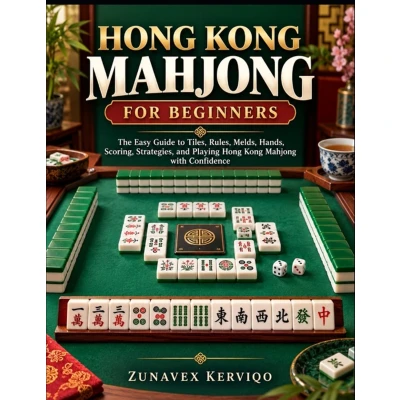
Ready to sit at a Hong Kong Mahjong table without feeling completely lost?The tiles may look confusing. The calls happen quickly. You may know that you need a winning hand, but still wonder what to keep, what to discard, when to call, how the scoring works, or whether your completed hand actually qualifies.Hong Kong Mahjong For Beginners gives you a clear path from recognizing your first tiles to making more informed decisions during an actual game.Instead of asking you to memorize everything at once, this practical guide builds your understanding step by step.Inside, you will learn how to: - Recognize the three numbered suits, winds, dragons, flowers, and seasons- Understand pairs, chows, pungs, kongs, melds, and complete hands- Set up the table, build the walls, identify player positions, and follow the flow of a round- Understand the draw, evaluate, and discard rhythm of normal play- Build a hand using the four-groups-and-a-pair structure- Identify useful draws, flexible tile connections, waiting hands, and realistic routes to completion- Understand fan and the scoring features that can affect a hand's value- Recognize the difference between concealed and exposed combinations- Read discards and public information without pretending that you can know another player's exact hand- Make more thoughtful keep-or-discard decisions- Understand when a call can improve your hand and when it can reduce flexibility or scoring possibilities- Recognize common beginner mistakes before they become habits- Practice your decision-making with realistic hand examples and exercises- Use the final quick-reference checklist before, during, and after a gameOne of the most important lessons in this book is that Hong Kong Mahjong does not have one completely universal rule sheet. Different tables may use different minimum-fan requirements, bonus-tile procedures, scoring charts, payout conventions, and other house rules. This guide therefore teaches a practical beginner framework while encouraging you to confirm the rules being used at your particular table.You will also learn why a hand that looks complete may not necessarily satisfy the table's scoring requirement, why calling a tile is more than simply making a visible group, and why a good discard decision depends on structure, flexibility, information, risk, and the stage of the round.Whether you are preparing for your first game, trying to understand what experienced players are doing, or looking for a practical reference to keep nearby while practicing, this guide is designed to make the fundamentals easier to understand.Learn the tiles. Understand the structure. Follow the table. Build better decisions.Your next game starts with understanding what to look for.
 Prijshistorie
* Prijshistorie bevat geen data van Amazon, Amazon Marketplace.
Prijzen voor het laatst bijgewerkt op:
 Gerelateerde resultaten
 Productspecificaties


