


€ 175,00 Gratis verzending

Uitgelicht
|
|
175,00 |
Naar shop
|

|
183,30 |
Naar shop
|

|
183,30 |
Naar shop
|
| VERGELIJK ALLE AANBIEDERS (3) | ||
 Beschrijving
Vergelijk aanbieders (3)
€ 175,00 Gratis verzending
€ 183,30 Gratis verzending
€ 183,30 Gratis verzending
Winkels met andere maten
Beschrijving
(1)
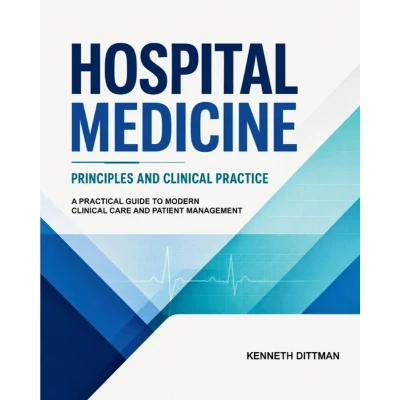
Hospital medicine demands more than memorizing diagnoses. It requires clear reasoning under pressure, rapid recognition of deterioration, safe treatment decisions, effective communication, and reliable transitions of care. Hospital Medicine: Principles and Clinical Practice is a practical, clinician-focused guide designed to help residents, registrars, hospitalists, and other clinicians in training navigate those demands with greater structure and confidence. Across 33 chapters, Kenneth Dittman connects core principles with the realities of modern inpatient practice. Readers learn how to reason probabilistically, reduce diagnostic error, avoid unnecessary testing and treatment, manage difficult admissions, conduct safer handoffs, work effectively with consultants, and use artificial intelligence without surrendering clinical judgment. The book's bedside triage framework organizes high-risk presentations-shock, chest pain, altered mental status, falls, fever, dyspnea, and acute abdominal pain-around the critical 0-, 1-, 6-, and 24-hour windows. Clear "What Not to Miss" and "When to Panic" guidance helps readers identify dangerous diagnoses, recognize objective escalation triggers, and select an appropriate level of care. Disease-specific chapters translate evidence into practical pathways for cardiovascular, pulmonary, infectious, renal, gastrointestinal, endocrine, neurologic, hematologic, and oncologic disorders. GRADE-style evidence ratings, tiered management options, common pitfalls, disposition criteria, clinical pearls, red flags, diagnostic criteria, and board-style review questions make complex material easier to understand, apply, and retain. Equally important, this handbook addresses the parts of hospital medicine that determine whether treatment produces a lasting outcome: geriatric care, intellectual and developmental disabilities, social determinants of health, addiction medicine, palliative care, discharge planning, virtual wards, and primary-care handoffs. Rather than offering isolated facts, the text shows how clinical decisions unfold over time, where errors develop, and how teams can respond. Its consistent chapter structure supports fast reference during busy shifts while also encouraging deeper, deliberate learning between encounters. Technical appendices provide a point-of-care ultrasound view index, widely used clinical formulas and decision-support tools, drug titration guidance, compatibility principles, and regional clinical variations for international readers. Whether used for rotation preparation, residency study, bedside review, teaching, or ongoing professional development, Hospital Medicine: Principles and Clinical Practice offers a comprehensive framework for safer decisions, stronger clinical reasoning, and more coordinated patient care-from admission through discharge.
 Prijshistorie
 * Prijshistorie bevat geen data van Amazon, Amazon Marketplace.
Prijzen voor het laatst bijgewerkt op:
 Gerelateerde resultaten
 Productspecificaties


