


€ 215,00 Gratis verzending

Uitgelicht
|
|
215,00 |
Naar shop
|

|
233,11 |
Naar shop
|

|
233,11 |
Naar shop
|
| VERGELIJK ALLE AANBIEDERS (3) | ||
 Beschrijving
Vergelijk aanbieders (3)
€ 215,00 Gratis verzending
€ 233,11 Gratis verzending
€ 233,11 Gratis verzending
Winkels met andere maten
Beschrijving
(1)
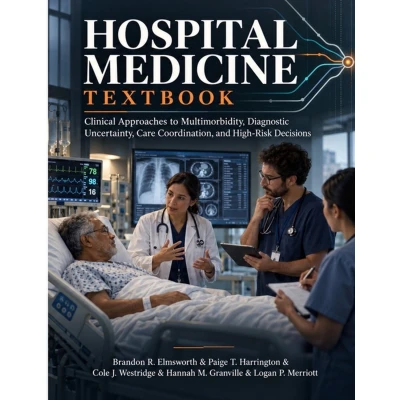
Hospital medicine is practiced on moving ground.The patient's condition changes. New laboratory and imaging results alter what seemed probable yesterday. Several chronic diseases compete with the acute problem for attention. Consultants enter the case. Medications are added, withheld, restarted, or reconsidered. And responsibility for the plan moves between clinicians, teams, shifts, and eventually care settings.Hospital Medicine Textbook examines how to keep that evolving picture clinically coherent.When the patient changes, yesterday's diagnosis and treatment plan must be tested against today's physiology. Improvement may support the working explanation; unexpected deterioration may expose a missed process, complication, adverse treatment effect, or second diagnosis. Reassessment therefore becomes part of treatment itself.When the evidence changes, diagnostic uncertainty has to be managed without either premature closure or endless investigation. The book approaches laboratory findings, imaging, response to therapy, competing diagnoses, and risk as pieces of a developing clinical argument. The objective is not simply to accumulate data, but to determine which new information should actually change management.Multimorbidity adds another layer. A hospitalized adult may simultaneously have heart failure, kidney dysfunction, diabetes, anticoagulation, infection, frailty, medication burden, and functional decline. Decisions that appear appropriate for one problem can worsen another. Effective inpatient care therefore depends on prioritization, trade-offs, and treatment plans that reflect the patient as a whole rather than a list of independent diagnoses.And when responsibility changes, clinical reasoning has to survive the handoff. Consultation, multidisciplinary work, discharge preparation, medication reconciliation, escalation planning, and transitions of care all depend on communicating not only what has been done, but what remains uncertain, what requires surveillance, and what should happen if the patient's course changes.This 444-page textbook is intended for physicians, residents, medical trainees, and other healthcare professionals who want a broader understanding of inpatient medicine as both a clinical and coordinated practice.Its central concern is continuity of judgment: how to make high-stakes decisions without losing the connections among diagnosis, multimorbidity, evolving risk, and the people responsible for carrying the plan forward.
 Prijshistorie
 * Prijshistorie bevat geen data van Amazon, Amazon Marketplace.
Prijzen voor het laatst bijgewerkt op:
 Gerelateerde resultaten
 Productspecificaties


