

€ 32,07 Gratis verzending

Gesponsorde links
|
|
32,07 |
Naar shop
|

|
32,99 |
Naar shop
|
| VERGELIJK ALLE AANBIEDERS (2) | ||
 Beschrijving
Vergelijk aanbieders (2)
Gesponsorde links · Sommige shops betalen ons een vergoeding
€ 32,07 Gratis verzending
€ 32,99 Gratis verzending
Winkels met andere maten
Beschrijving
(1)
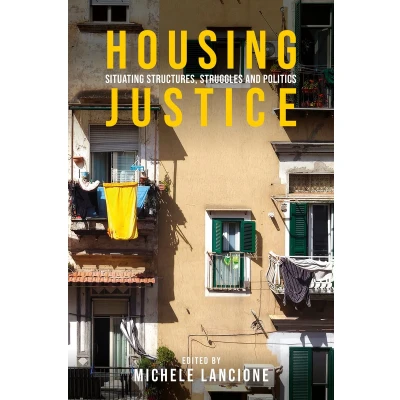
A groundbreaking collection examining housing as a site of both dispossession and liberation under contemporary racial capitalism. Through global case studies, contributors reveal how structural violence operates through dwelling while documenting grassroots struggles for just habitation beyond conventional policy solutions. Housing justice maps the structures that dispossess and the movements that repair. This book expands on available scholarship to show how colonial legacies, financialisation and extractive ecologies produce housing as precarious for the many – and how tenant unions, cooperatives and mundane intersectional struggles build alternatives. The volume brings together research across three interconnected domains. First, it traces the structural formations that produce housing injustice – from colonial legacies and financialisation to ecological extraction. Second, it explores the everyday intersections where housing becomes entangled with popular economies, stigmatised labour, planning and the afterlives of eviction – effectively situating what struggling for ‘just’ housing means and for whom. Third, it examines organised liberations at the intersection of anti-gentrification mobilisations and the struggle for urban nature, internationalism and tenant movements, as well as intergenerational property transmission and housing commons. Drawing on long-term research in cities from Delhi to Montreal and from Rome to Belo Horizonte, the contributors investigate how housing mediates our relationship with the world through extended geographies of violence and care. They show how the promise of shelter is always conditional, shaped by racial capitalism, coloniality and dispossession – yet also how communities craft radical alternatives through everyday dwelling and collective action. The book provides in-depth empirical and conceptual resources for students, researchers and organisers seeking to understand and transform the conditions of habitation in an era of ever enduring housing injustice. Housing justice examines how contemporary dwelling operates at the intersection of violence and liberation. Through situated research spanning five continents, contributors analyse housing not as a bounded object but as extended geographies shaped by colonialism, financialisation and racial capitalism. The volume traces structural formations of injustice, everyday experiences of precarious habitation and collective movements for transformation. Long-term situated research is presented from the case of financialisation of housing in Eastern Europe to sex workers' housing struggles in Italy, from extended forms of urbanisation in India to the scaling-out of tenant organising in North America. Moving beyond the urge to provide normative policy ‘fixes’ for the housing question, the book develops a tripartite approach—structures, intersections, liberations—that reveals housing as a key site for understanding and challenging fundamental structural injustices of our time. Essential reading for those seeking situated, politically committed scholarship on the global housing and habitational crisis.
 Prijshistorie
* Prijshistorie bevat geen data van Amazon.
Prijzen voor het laatst bijgewerkt op:
 Gerelateerde resultaten
 Productspecificaties


