
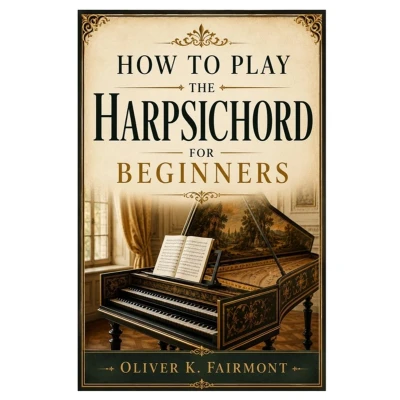
HOW TO PLAY The HARPSICHORD FOR BEGINNERS: Master Baroque Music From Beginning
Uitgelicht

|
11,29 |
Naar shop
|

|
11,29 |
Naar shop
|

|
11,50 |
Naar shop
|
| VERGELIJK ALLE AANBIEDERS (3) | ||
 Beschrijving
Bol
Discover the timeless beauty and rich musical heritage of the harpsichord with How to Play the Harpsichord for Beginners, a comprehensive and practical guide designed specifically for newcomers, students, hobbyists, and aspiring keyboard musicians. Whether you are completely new to music or transitioning from another keyboard instrument, this book provides the knowledge, techniques, and confidence needed to begin your harpsichord journey successfully.Starting with a clear introduction to the instrument, readers will learn what makes the harpsichord unique, how it differs from the piano, and why it remains one of the most fascinating and influential keyboard instruments in music history. The book explores the origins and development of the harpsichord, its role in Renaissance and Baroque music, and the contributions of legendary composers such as Johann Sebastian Bach, George Frideric Handel, Domenico Scarlatti, and François Couperin.Through carefully structured lessons, readers will gain a complete understanding of the instrument's components, including the keyboard, strings, jacks, plectra, soundboard, registers, and various harpsichord designs. The guide also provides practical advice on selecting an instrument, comparing acoustic and digital harpsichords, choosing essential accessories, and creating an ideal practice environment.A strong technical foundation is developed through detailed instruction on posture, hand position, finger independence, finger numbering systems, efficient movement, coordination exercises, and healthy playing habits. Beginners will learn how to sit correctly at the keyboard, eliminate unnecessary tension, improve finger control, and build the physical skills necessary for long-term success.The book introduces the fundamentals of keyboard navigation, including note identification, white and black key patterns, finding Middle C, understanding octaves, keyboard geography, and finger placement drills. Readers will also master the essential principles of music reading, including the musical staff, treble and bass clefs, note values, time signatures, measures, rests, rhythm interpretation, and expression markings.Special attention is given to rhythm development through step-by-step instruction on counting, maintaining steady time, using a metronome, understanding simple and compound rhythms, and practicing rhythm-building exercises. Students will learn how to establish a strong internal pulse and perform with confidence and accuracy.


 Beschrijving
(1)
Beschrijving
(1)
Discover the timeless beauty and rich musical heritage of the harpsichord with How to Play the Harpsichord for Beginners, a comprehensive and practical guide designed specifically for newcomers, students, hobbyists, and aspiring keyboard musicians. Whether you are completely new to music or transitioning from another keyboard instrument, this book provides the knowledge, techniques, and confidence needed to begin your harpsichord journey successfully.Starting with a clear introduction to the instrument, readers will learn what makes the harpsichord unique, how it differs from the piano, and why it remains one of the most fascinating and influential keyboard instruments in music history. The book explores the origins and development of the harpsichord, its role in Renaissance and Baroque music, and the contributions of legendary composers such as Johann Sebastian Bach, George Frideric Handel, Domenico Scarlatti, and François Couperin.Through carefully structured lessons, readers will gain a complete understanding of the instrument's components, including the keyboard, strings, jacks, plectra, soundboard, registers, and various harpsichord designs. The guide also provides practical advice on selecting an instrument, comparing acoustic and digital harpsichords, choosing essential accessories, and creating an ideal practice environment.A strong technical foundation is developed through detailed instruction on posture, hand position, finger independence, finger numbering systems, efficient movement, coordination exercises, and healthy playing habits. Beginners will learn how to sit correctly at the keyboard, eliminate unnecessary tension, improve finger control, and build the physical skills necessary for long-term success.The book introduces the fundamentals of keyboard navigation, including note identification, white and black key patterns, finding Middle C, understanding octaves, keyboard geography, and finger placement drills. Readers will also master the essential principles of music reading, including the musical staff, treble and bass clefs, note values, time signatures, measures, rests, rhythm interpretation, and expression markings.Special attention is given to rhythm development through step-by-step instruction on counting, maintaining steady time, using a metronome, understanding simple and compound rhythms, and practicing rhythm-building exercises. Students will learn how to establish a strong internal pulse and perform with confidence and accuracy.
 Productspecificaties
 Prijshistorie
* Prijshistorie bevat geen data van Amazon, Amazon Marketplace.
Prijzen voor het laatst bijgewerkt op:
 Gerelateerde resultaten


