


€ 20,00 € 2,99 verzendkosten Totaal € 22,99

Uitgelicht
|
|
20,00 |
Naar shop
|
| VERGELIJK ALLE AANBIEDERS (1) | ||
 Beschrijving
Vergelijk aanbieders (1)
€ 20,00 € 2,99 verzendkosten Totaal € 22,99
Winkels met andere maten
Beschrijving
(1)
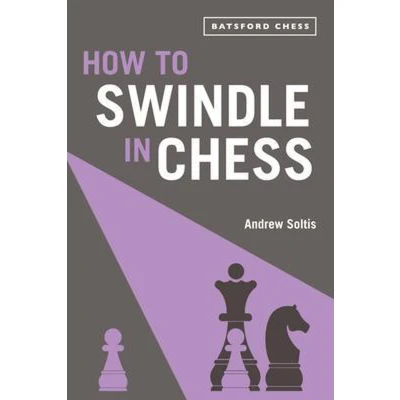
Exploring the under appreciated skill of swindling in chess, Andrew Soltis explains how and when to set strategic traps to exploit an opponent's over-confidence. A book by stalwart chess writer on an aspect of chess that is quite common, but little is written about, swindling in chess. In chess, a swindle is a ruse by which a player in a losing position tricks his opponent, and thereby achieves a win or draw instead of the expected loss. Renown chess writers Horowitz and Reinfeld observe that swindles,"though ignored in virtually all chess books","play an enormously important role in over-the-board chess, and decide the fate of countless games". Andrew Soltis, American chess journalist, says swindles are not accidental or a matter of luck. Swindling is a skill. But there has been almost nothing written about how to do it, how to make yourself lucky in chess. Swindling means setting traps that exploit an opponent's over-confidence. It means choosing the move that has the greatest chance of winning, rather than the move that has the least chance of losing. Soltis' new proposal will explain to players of all levels how to do just that with plenty of examples to explain along the way.
 Productspecificaties
| EAN |
|
|---|---|
| Maat |
|
 Prijshistorie
 Prijzen voor het laatst bijgewerkt op:
 Gerelateerde resultaten


