


€ 2,99 Gratis verzending

Uitgelicht
|
|
2,99 |
Naar shop
|

|
17,34 |
Naar shop
|

|
17,34 |
Naar shop
|
| VERGELIJK ALLE AANBIEDERS (3) | ||
 Beschrijving
Vergelijk aanbieders (3)
€ 2,99 Gratis verzending
€ 17,34 Gratis verzending
€ 17,34 Gratis verzending
Winkels met andere maten
Beschrijving
(1)
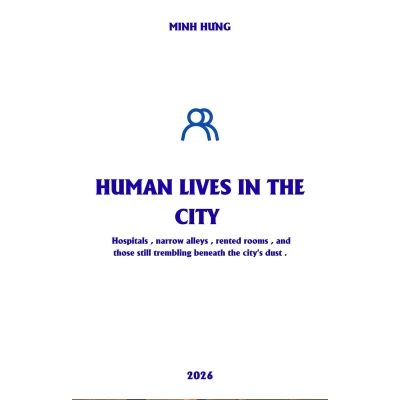
Human Lives in the City by Minh Hung / Nguyen Dong Hung, M.D. is a powerful work of Vietnamese literary nonfiction, realistic prose, narrative essays, memoir, social reflection, and medical humanities. This book does not look at the city from bright boulevards, luxury towers, polished glass windows, or the language of progress. Instead, it bends down toward the lives that the city often passes by too quickly: poor patients, exhausted family members outside emergency rooms, migrant workers, rented-room families, elderly people living alone, disabled bodies seen as burdens, divorced women returning to small rooms with their children, delivery riders in the rain, hospital cleaners, security guards, street vendors, and children growing up in narrow alleys. The city in this book is not merely a place of opportunity. It is also a place of sleepless hospital corridors, unpaid medical bills, cold meals after night shifts, empty gas cylinders before dinner, bruises hidden under long sleeves, plastic chairs at the end of hallways, old calendars in nursing homes, and yellow lamps still burning at the end of wet alleys. Through vivid sensory language — the smell of disinfectant, cold rice, menthol oil, rain on corrugated roofs, floor cleaner, street food, and damp rented rooms — Human Lives in the City turns ordinary details into lasting literary images. The book follows those who live at the fragile edges of the modern city: a mother sleeping upright outside the emergency room, a father silently holding a hospital bill, a disabled girl who wants to wear a red dress without being pitied, an old woman dialing her son's number again and again, a cleaner eating cold rice after wiping blood from the emergency-room floor, a nurse tying back an elderly patient's gray hair, a motorbike taxi driver refusing payment from a mother carrying a feverish child, and a child breaking a hot loaf of bread in half to share with a friend. At the same time, Human Lives in the City also enters the hidden loneliness of the wealthy: a woman wearing diamonds crying inside a car, a villa with a twelve-seat dining table where almost no one eats together, a divorce handled by lawyers while harsh words still break through the curtains, a wealthy patient in a private hospital room crying like a child after hearing a difficult diagnosis, and a successful man afraid to return to the beautiful apartment he owns. The book does not romanticize poverty, condemn wealth, exploit suffering, or turn pain into spectacle. It asks readers to look slowly, closely, and honestly at the human beings behind illness, money, aging, disability, family breakdown, loneliness, and small acts of kindness. With a plain yet lyrical style, Minh Hung / Nguyen Dong Hung, M.D. writes with the quiet authority of someone who has seen people at their weakest and still believes that the human light has not gone out. Human Lives in the City is ideal for readers interested in Vietnamese literature, urban literature, literary nonfiction, medical humanities, narrative medicine, hospital stories, social essays, aging, disability, poverty, family trauma, modern loneliness, and compassionate storytelling. In the end, the city may wear people down — but it has not yet extinguished the fragile human light entirely.
 Prijshistorie
 * Prijshistorie bevat geen data van Amazon, Amazon Marketplace.
Prijzen voor het laatst bijgewerkt op:
 Gerelateerde resultaten
 Productspecificaties


