


€ 34,80 Gratis verzending

Uitgelicht
|
|
34,80 |
Naar shop
|
| VERGELIJK ALLE AANBIEDERS (1) | ||
 Beschrijving
Vergelijk aanbieders (1)
€ 34,80 Gratis verzending
Winkels met andere maten
Beschrijving
(1)
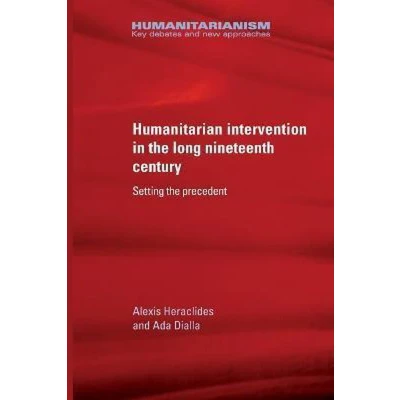
A comprehensive presentation of humanitarian intervention in theory and practice during the course of the nineteenth century. During the course of the long nineteenth century, a precedent was set for the theory and practice of humanitarian intervention that is still influencing the current debate on this controversial concept. This volume provides a comprehensive presentation of the development of humanitarian theories in international law and international political theory, and assesses four nineteenth-century case studies, linking them to the ongoing theoretical arguments, with an emphasis on the lesser-known Russian dimension.The book starts with a brief overview of the current situation, and goes on to present a genealogy of the idea of assisting people who are maltreated. The concept is first found in the Renaissance, and was followed by the nineteenth-century civilisation–barbarity dichotomy, with its biased Eurocentric gaze. The authors then examine the pivotal international law dimension, the arguments of advocates and opponents of humanitarian intervention, and the views of major political theorists. The second part of the book examines in detail four instances of humanitarian intervention: the Greek war (1821–31); the Lebanon/Syria ethnic conflict (1860–61); the Bulgarian case (1876–78), with emphasis on the role of Britain and Russia; and U.S. intervention in Cuba (1895–98). The book will be of benefit to scholars and students of international relations, international history, international law, international political theory and ethics in international politics. This book is a comprehensive presentation of humanitarian intervention in theory and practice during the course of the nineteenth century. Through four case studies, it sheds new light on the international law debate and the political theory on intervention, linking them to ongoing issues, and paying particular attention to the lesser known Russian dimension.The book begins by tracing the genealogy of the idea of humanitarian intervention to the Renaissance, evaluating the Eurocentric gaze of the civilisation-barbarity dichotomy, and elucidates the international legal arguments of both advocates and opponents of intervention, as well as the views of major political theorists. It then goes on to examine four cases as humanitarian interventions: the Greek War of Independence (1821-31), the Lebanon and Syria (1860-61), the Bulgarian atrocities (1876-78), and the U.S. intervention in Cuba (1895-98). Humanitarian intervention in the long nineteenth century will be of benefit to scholars and students of International Relations, international history, international law and international political theory.An electronic edition of this book is freely available under a Creative Commons (CC BY-NC-ND) licence.
 Productspecificaties
| EAN |
|
|---|---|
| Maat |
|
 Prijshistorie
 Prijzen voor het laatst bijgewerkt op:
 Gerelateerde resultaten


