


€ 19,57 € 2,99 verzendkosten Totaal € 22,56

Gesponsorde links
|
|
19,57 |
Naar shop
|

|
20,91 |
Naar shop
|

|
20,91 |
Naar shop
|
| VERGELIJK ALLE AANBIEDERS (3) | ||
 Beschrijving
Vergelijk aanbieders (3)
Gesponsorde links · Sommige shops betalen ons een vergoeding
€ 19,57 € 2,99 verzendkosten Totaal € 22,56
€ 20,91 Gratis verzending
€ 20,91 Gratis verzending
Winkels met andere maten
Beschrijving
(1)
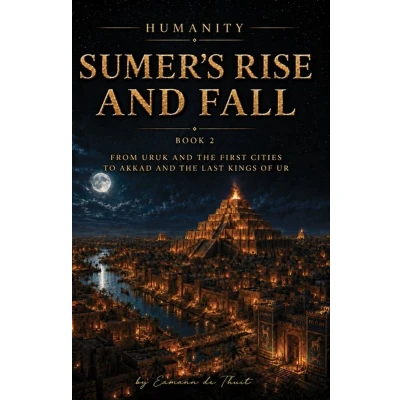
Before Babylon, before Rome, and before the great empires of the ancient world, the people of Sumer built something humanity had never seen before: cities.Between the shifting rivers and marshlands of southern Mesopotamia, farmers, laborers, merchants, priests, scribes, and kings created a new kind of human society. They raised temples from mudbrick, redirected rivers, organized thousands of workers, developed systems of law and government, and pressed their memories into clay.But civilization brought more than progress. The same institutions that made cities possible also created new divisions of wealth, status, labor, and power.Humanity: Sumer's Rise and Fall tells the story of Sumer from the growth of Uruk and the birth of urban life to the conquests of Sargon of Akkad and the final kings of Ur. Drawing on archaeology, surviving tablets, ancient literature, and modern scholarship, Eamann de Thuit brings this distant world back to life through the people who inhabited it.Inside this book, you will discover: - How rivers, marshes, irrigation, and collective labor shaped the land of Sumer- Why Uruk became one of humanity's first great cities- How accounting marks developed into the earliest known writing system- What daily life was like for farmers, weavers, merchants, scribes, priests, soldiers, women, children, and enslaved people- How temples grew into powerful economic and administrative institutions- Why rival city-states fought over land, water, trade, and prestige- How law reflected status, inequality, debt, injury, and social order- How Sumerian merchants connected Mesopotamia with the Persian Gulf, Iran, Afghanistan, and the Indus world- What the gods, myths, hymns, graves, and stories of Gilgamesh reveal about Sumerian hopes and fears- How Akkadian conquest, political rivalry, environmental pressure, and economic strain transformed the region- Why Sumerian civilization disappeared politically but survived through writing, religion, law, literature, and cultural memoryThis is not simply a history of kings, inventions, and ruined cities. It is the story of ordinary people living through one of humanity's greatest transformations. Their world was ingenious, ambitious, unequal, fragile, and deeply human.Sumer did not produce civilization in a single moment. Its people built it gradually, tested its possibilities, endured its costs, and left behind ideas that continued to shape the world long after their cities fell.Book 2 of the Humanity History Series.
 Prijshistorie
* Prijshistorie bevat geen data van Amazon, Amazon Marketplace.
Prijzen voor het laatst bijgewerkt op:
 Gerelateerde resultaten
 Productspecificaties


