


€ 35,99 Gratis verzending

Uitgelicht
|
|
35,99 |
Naar shop
|
| VERGELIJK ALLE AANBIEDERS (1) | ||
 Beschrijving
Vergelijk aanbieders (1)
€ 35,99 Gratis verzending
Winkels met andere maten
Beschrijving
(1)
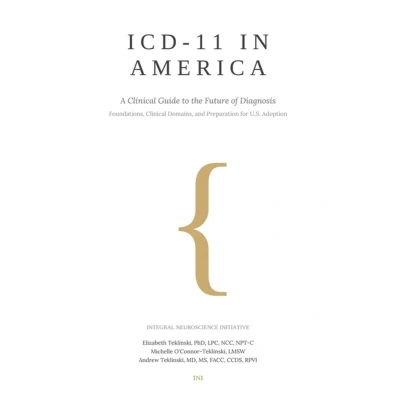
In May 2019, the World Health Assembly adopted ICD-11. By January 2022, implementation began worldwide. Yet the United States remains on ICD-10-a classification system designed before electronic health records, before the opioid crisis revealed the consequences of imprecise pain diagnosis, and before science transformed our understanding of autism, trauma, and chronic disease.The gap is no longer theoretical. International research now uses ICD-11 terminology. Global health data flows through ICD-11 structures. Clinicians treating chronic pain, neurodevelopmental conditions, and post-viral syndromes already find that ICD-10 cannot capture what they observe in practice.This guide prepares American clinicians for what comes next. It explains the structural innovations that make ICD-11 more than an update: the chronic pain classification that finally distinguishes pain mechanisms from pain locations, the dimensional autism model that reflects clinical reality, and the recognition of conditions like long COVID that emerged after ICD-10 was written. The foundation layer enables precision medicine approaches impossible under previous classification systems.Diagnostic classification shapes everything downstream: what conditions get named, what populations get counted, what treatments get studied, what care gets reimbursed. When classification changes, clinical practice follows. The question is not whether the U.S. will transition, but whether clinicians will be ready when it does.What you will learn: ICD-11 architecture and clinical logic, the chronic pain classification system, the autism dimensional model, post-viral syndrome recognition, mental health diagnostic changes, U.S. regulatory timeline, preparation strategies, and documentation templates.Written for physicians, mental health professionals, health system leaders, policy researchers, and clinical educators preparing for the future of diagnosis. This essential reference bridges the gap between global standards and American practice, providing the knowledge clinicians need to prepare their organizations and improve patient outcomes through diagnostic accuracy.
 Productspecificaties
| EAN |
|
|---|---|
| Maat |
|
 Prijshistorie
 Prijzen voor het laatst bijgewerkt op:
 Gerelateerde resultaten


