
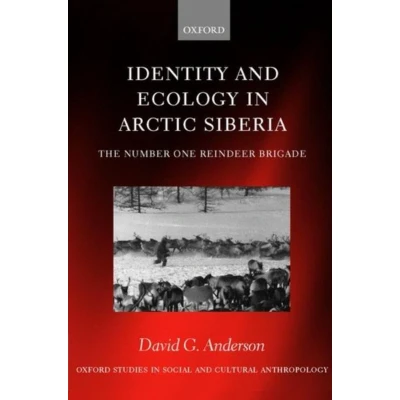
Identity and Ecology in Arctic Siberia
Uitgelicht

|
44,76 |
Naar shop
|
| VERGELIJK ALLE AANBIEDERS (1) | ||
 Beschrijving
Bol Partner
A first-hand account of a reindeer-herding collective in the remote Taimyr peninsula of Siberia, providing information on the historical and political dynamics of northern Asia. The text also traces the changes caused in the region by the formation of, and the break-up of, the Soviet Union. This is a first-hand account of a reindeer-herding collective in the remote Taimyr peninsula of Siberia. The author gives an intimate description of the day-to-day lives of a little-known group of Evenkis as they face both economic and ecological challenges. His book therefore fills a gap in our understanding of the historical and political dynamics of northern Asia, and traces the changes caused in the region by the formation of, and the recent break-up of, the Soviet Union. It also addresses wider questions of ecological theory, nationalism, and the formation of identity. Professor Anderson's idea of `nationality inflation' provides a valuable new perspective on these topics. He shows how the Soviet state contributed to this `inflation' through its creation of `authorized identities' and suggests how identity policy and the discourse it generated became a powerful historical force integrating the social dynamics of economy, politics, and culture.


Vergelijk aanbieders (1)

 Beschrijving
(1)
Beschrijving
(1)
A first-hand account of a reindeer-herding collective in the remote Taimyr peninsula of Siberia, providing information on the historical and political dynamics of northern Asia. The text also traces the changes caused in the region by the formation of, and the break-up of, the Soviet Union. This is a first-hand account of a reindeer-herding collective in the remote Taimyr peninsula of Siberia. The author gives an intimate description of the day-to-day lives of a little-known group of Evenkis as they face both economic and ecological challenges. His book therefore fills a gap in our understanding of the historical and political dynamics of northern Asia, and traces the changes caused in the region by the formation of, and the recent break-up of, the Soviet Union. It also addresses wider questions of ecological theory, nationalism, and the formation of identity. Professor Anderson's idea of `nationality inflation' provides a valuable new perspective on these topics. He shows how the Soviet state contributed to this `inflation' through its creation of `authorized identities' and suggests how identity policy and the discourse it generated became a powerful historical force integrating the social dynamics of economy, politics, and culture.
 Productspecificaties
| EAN |
|
|---|---|
| Maat |
|
 Prijshistorie
Prijzen voor het laatst bijgewerkt op:
 Gerelateerde resultaten


