

€ 11,95 Gratis verzending

Uitgelicht
|
|
11,95 |
Naar shop
|

|
11,95 |
Naar shop
|

|
12,50 |
Naar shop
|
| VERGELIJK ALLE AANBIEDERS (3) | ||
 Beschrijving
Vergelijk aanbieders (3)
€ 11,95 Gratis verzending
€ 11,95 Gratis verzending
€ 12,50 € 2,99 verzendkosten Totaal € 15,49
Winkels met andere maten
Beschrijving
(1)
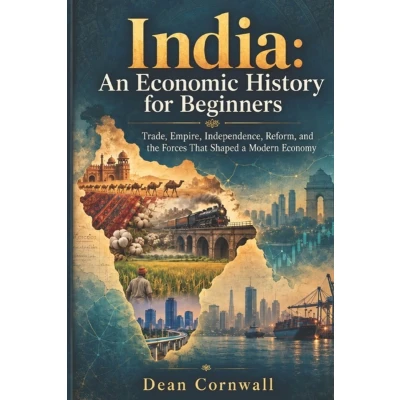
Why did one of the world's oldest trading regions become the center of a colonial empire, build a heavily managed economy after independence, and then change course again in 1991?India: An Economic History for Beginners tells that story in clear, readable language.Beginning with agriculture, trade, textiles, merchant networks, and the Mughal economy, the book follows the economic forces that shaped India through East India Company rule, British colonialism, railways, famine, industrialization, independence, national planning, the Green Revolution, banking reform, the 1991 economic crisis, and the rise of today's service and digital economy.Rather than reducing India's history to a simple argument about colonialism, socialism, or free markets, the book asks more useful questions: What problem was each policy trying to solve? Who benefited? Who carried the risk? What worked, what did not, and what new problems appeared afterward?Along the way, readers will explore: - India's place in Indian Ocean trade before European dominance - The East India Company's transformation from merchant to territorial power - Textiles, railways, industry, famine, migration, and colonial finance - Dadabhai Naoroji, Jamsetji Tata, P. C. Mahalanobis, M. S. Swaminathan, and Manmohan Singh - The economic choices made after independence - The Green Revolution and the transformation of food production - The 1991 balance-of-payments crisis and economic reforms - Poverty, jobs, cities, infrastructure, globalization, and the modern Indian economyWritten for curious readers rather than specialists, this book explains economic ideas when they become important and keeps the history connected to real people, places, and decisions.For anyone who wants to understand not only how India's economy changed, but why.
 Prijshistorie
 * Prijshistorie bevat geen data van Amazon, Amazon Marketplace.
Prijzen voor het laatst bijgewerkt op:
 Gerelateerde resultaten
 Productspecificaties


