
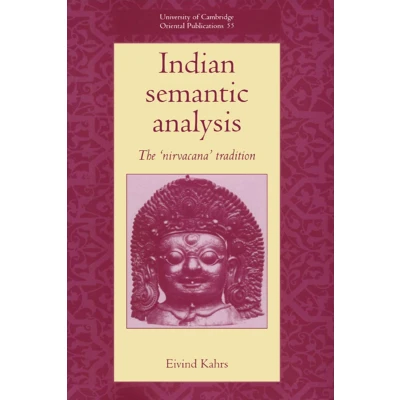
Indian Semantic Analysis
Uitgelicht

|
108,37 |
Naar shop
|
| VERGELIJK ALLE AANBIEDERS (1) | ||
 Beschrijving
Bol Partner
The Indian tradition of semantic elucidation known as nirvacana analysis represented a powerful hermeneutic tool in the exegesis and transmission of authoritative scripture. Nevertheless, it has all too frequently been dismissed by modern scholars as anything from folk-etymology to a primitive forerunner of historical linguistics. Eivind Kahrs argues that such views fall short of explaining both its acceptance within the sophisticated grammatical tradition of vyakarana and its effective usage in the processing of Sanskrit texts. He establishes his argument by investigating the learned Sanskrit literature of Saiva Kashmir and explains the nirvacana tradition in the light of a model substitution, used at least since the time of the Upanisads and later refined in the technical literatures of grammar and ritual. According to this model, a substitute (adesa) takes the place (sthana) of the original placeholder (sthanin). On the basis of a searching analysis of Sanskrit texts, the author argues that this sthana 'place' can be interpreted as 'meaning', the model thereby providing favourable circumstances for reinterpretation and change.


Vergelijk aanbieders (1)

 Beschrijving
(1)
Beschrijving
(1)
The Indian tradition of semantic elucidation known as nirvacana analysis represented a powerful hermeneutic tool in the exegesis and transmission of authoritative scripture. Nevertheless, it has all too frequently been dismissed by modern scholars as anything from folk-etymology to a primitive forerunner of historical linguistics. Eivind Kahrs argues that such views fall short of explaining both its acceptance within the sophisticated grammatical tradition of vyakarana and its effective usage in the processing of Sanskrit texts. He establishes his argument by investigating the learned Sanskrit literature of Saiva Kashmir and explains the nirvacana tradition in the light of a model substitution, used at least since the time of the Upanisads and later refined in the technical literatures of grammar and ritual. According to this model, a substitute (adesa) takes the place (sthana) of the original placeholder (sthanin). On the basis of a searching analysis of Sanskrit texts, the author argues that this sthana 'place' can be interpreted as 'meaning', the model thereby providing favourable circumstances for reinterpretation and change.
 Productspecificaties
| EAN |
|
|---|---|
| Maat |
|
 Prijshistorie
Prijzen voor het laatst bijgewerkt op:
 Gerelateerde resultaten


