


€ 43,99 Gratis verzending

Uitgelicht
|
|
43,99 |
Naar shop
|

|
46,90 |
Naar shop
|

|
46,90 |
Naar shop
|
| VERGELIJK ALLE AANBIEDERS (3) | ||
 Beschrijving
Vergelijk aanbieders (3)
€ 43,99 Gratis verzending
€ 46,90 Gratis verzending
€ 46,90 Gratis verzending
Winkels met andere maten
Beschrijving
(1)
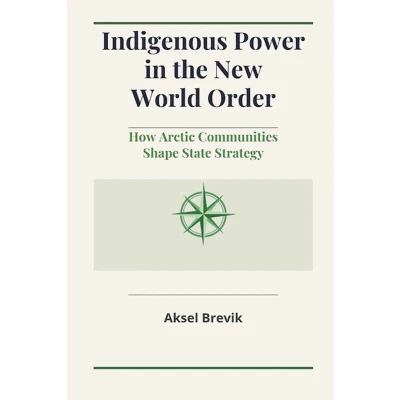
Across the Arctic, the most decisive strategic contests are not only between rival states but within states themselves: between national projects that promise security and prosperity, and northern communities whose rights and institutions determine what can actually be built. Airfields, ports, roads, mines, and communications sites may look like engineering feats from afar, yet on the ground they are legitimacy projects, dependent on authority that is shared, negotiated, and sometimes withheld. As Arctic competition intensifies, the question that quietly governs outcomes is not simply where a state wants to go, but who must agree for it to stay.Indigenous Power in the New World Order explains how Indigenous political power operates as a strategic factor in Arctic state behaviour. Aksel Brevik shows how land claims agreements and governance structures translate into concrete leverage over infrastructure siting, permitting, monitoring, and operational rules. Through comparative analysis of consent dynamics and co-governance institutions, the book clarifies why procedural consultation often fails, how communities convert rights into bargaining power, and how states respond when consent is contested. It also examines co-management regimes as a form of governance infrastructure: institutions that can stabilise development and security presence when they are properly mandated, resourced, and trusted.Written for students, analysts, policy audiences, and general readers of geopolitics, the book offers a durable framework for understanding Arctic strategy through strategic legitimacy and local decision authority. Readers will come away able to assess when a project is likely to endure, why some agreements produce long-term governability while others unravel, and how partnership models can align national aims with local security and cultural continuity. The result is a clearer view of the Arctic not as an empty chessboard, but as a politically dense region where the future is negotiated - and where power is often closer to home than strategy documents admit.
 Prijshistorie
 * Prijshistorie bevat geen data van Amazon, Amazon Marketplace.
Prijzen voor het laatst bijgewerkt op:
 Gerelateerde resultaten
 Productspecificaties


