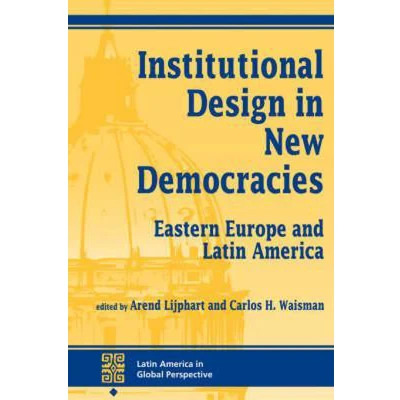

Institutional Design in New Democracies

Prijzen vanaf
28,66

Uitgelicht

VERGELIJK ALLE AANBIEDERS (2)

Beschrijving

Bol This volume focuses on the relationship between the tasks of institutional design and the outcomes of the process of economic and political liberalization in Latin America and in Central and Eastern Europe. The contributors emphasize the design of institutions to serve a market economy, the design of electoral laws, and the design of executive-legislative relations. Within this framework each chapter discusses the legacy of the pre-existing authoritarian regime; the range of preferences among various strategic actors with regard to the pace and mix of reforms; and the consequences of final choices for the institutionalization of effective economies and the process of democratization. Countries throughout Latin America and Central and Eastern Europe are moving from semi-closed to open economies and from authoritarian to democratic political systems. Despite important differences between the regions, these transitions involve similar tasks: the establishment of governmental institutions and electoral systems conducive to legitimation of the new and fragile democracies and expansion of the institutional infrastructure of a market economy. This volume looks at both regions, focusing on the relationship between the tasks of institutional design and the outcomes of the process of economic and political liberalization. In particular, the contributors emphasize the design of institutions to serve a market economy, the design of electoral laws, and the design of executive-legislative relations. Each chapter discusses the legacy of the pre-existing authoritarian regime; the range of preferences among various strategic actors (the government, state bureaucracies, opposition parties, and interest groups) with regard to the pace and mix of reforms; and the consequences of final choices for the institutionalization of effective economies and the process of democratization.

Vergelijk aanbieders (2)

Shop
Prijs
Verzendkosten
Totale prijs
28,66
gebruikt
Gratis
28,66
Naar shop
Gratis Shipping Costs
72,61
Gratis
72,61
Naar shop
Gratis Shipping Costs
Beschrijving (2)
Bol

This volume focuses on the relationship between the tasks of institutional design and the outcomes of the process of economic and political liberalization in Latin America and in Central and Eastern Europe. The contributors emphasize the design of institutions to serve a market economy, the design of electoral laws, and the design of executive-legislative relations. Within this framework each chapter discusses the legacy of the pre-existing authoritarian regime; the range of preferences among various strategic actors with regard to the pace and mix of reforms; and the consequences of final choices for the institutionalization of effective economies and the process of democratization. Countries throughout Latin America and Central and Eastern Europe are moving from semi-closed to open economies and from authoritarian to democratic political systems. Despite important differences between the regions, these transitions involve similar tasks: the establishment of governmental institutions and electoral systems conducive to legitimation of the new and fragile democracies and expansion of the institutional infrastructure of a market economy. This volume looks at both regions, focusing on the relationship between the tasks of institutional design and the outcomes of the process of economic and political liberalization. In particular, the contributors emphasize the design of institutions to serve a market economy, the design of electoral laws, and the design of executive-legislative relations. Each chapter discusses the legacy of the pre-existing authoritarian regime; the range of preferences among various strategic actors (the government, state bureaucracies, opposition parties, and interest groups) with regard to the pace and mix of reforms; and the consequences of final choices for the institutionalization of effective economies and the process of democratization.

Bol Partner

An examination of Latin America and Central and Eastern Europe which focuses on the relationship between the tasks of institutional design and the outcomes of the process of economic and political liberalization. Countries throughout Latin America and Central and Eastern Europe are moving from semi-closed to open economies and from authoritarian to democratic political systems. Despite important differences between the regions, these transitions involve similar tasks: the establishment of governmental institutions and electoral systems conducive to legitimation of the new and fragile democracies and expansion of the institutional infrastructure of a market economy.This volume looks at both regions, focusing on the relationship between the tasks of institutional design and the outcomes of the process of economic and political liberalization. In particular, the contributors emphasize the design of institutions to serve a market economy, the design of electoral laws, and the design of executive-legislative relations. Each chapter discusses the legacy of the pre-existing authoritarian regime; the range of preferences among various strategic actors (the government, state bureaucracies, opposition parties, and interest groups) with regard to the pace and mix of reforms; and the consequences of final choices for the institutionalization of effective economies and the process of democratization.


Productspecificaties

EAN
  • 9780813321097
  • 9780429979415
  • 9780367316273
Maat


Prijshistorie

Prijzen voor het laatst bijgewerkt op:

Uitgelichte Keuze
28,66
Naar shop
