
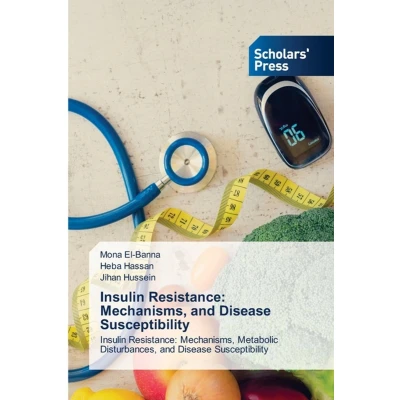
Insulin Resistance: Mechanisms, and Disease Susceptibility: Metabolic Disturbances, Susceptibility
Uitgelicht

|
64,99 |
Naar shop
|

|
65,35 |
Naar shop
|

|
65,35 |
Naar shop
|
| VERGELIJK ALLE AANBIEDERS (3) | ||
 Beschrijving
Bol
Insulin resistance is characterized by a reduced cellular response to insulin, mainly due to impaired glucose uptake, diminished glycogen synthesis, and altered glucose metabolism. It predominantly affects skeletal muscle, adipose tissue, and liver, leading to disrupted glucose and lipid homeostasis. Skeletal muscle shows reduced glucose disposal, adipose tissue exhibits increased lipolysis and inflammatory mediator release, and the liver demonstrates impaired glucose suppression with enhanced lipid accumulation and VLDL secretion. Insulin resistance also compromises endothelial function by reducing nitric oxide bioavailability and promoting pro-atherogenic signaling through selective impairment of the PI3K pathway, contributing to vascular dysfunction and atherosclerosis.


 Beschrijving
(1)
Beschrijving
(1)
Insulin resistance is characterized by a reduced cellular response to insulin, mainly due to impaired glucose uptake, diminished glycogen synthesis, and altered glucose metabolism. It predominantly affects skeletal muscle, adipose tissue, and liver, leading to disrupted glucose and lipid homeostasis. Skeletal muscle shows reduced glucose disposal, adipose tissue exhibits increased lipolysis and inflammatory mediator release, and the liver demonstrates impaired glucose suppression with enhanced lipid accumulation and VLDL secretion. Insulin resistance also compromises endothelial function by reducing nitric oxide bioavailability and promoting pro-atherogenic signaling through selective impairment of the PI3K pathway, contributing to vascular dysfunction and atherosclerosis.
 Productspecificaties
 Prijshistorie
* Prijshistorie bevat geen data van Amazon, Amazon Marketplace.
Prijzen voor het laatst bijgewerkt op:
 Gerelateerde resultaten


