


€ 239,00 Gratis verzending

Uitgelicht
|
|
239,00 |
Naar shop
|
| VERGELIJK ALLE AANBIEDERS (1) | ||
 Beschrijving
Vergelijk aanbieders (1)
€ 239,00 Gratis verzending
Winkels met andere maten
Beschrijving
(1)
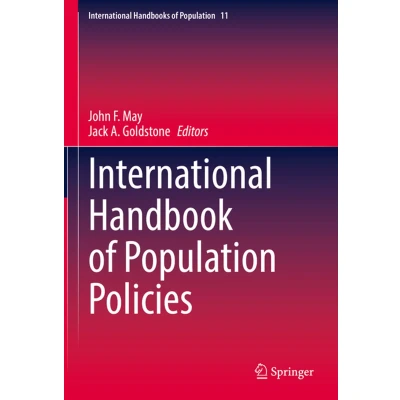
The section Theoretical Foundations reviews population issues today, population theories, the population policies’ framework as well as the linkages between population, development, health, food systems, and the environment. This Handbook offers an array of internationally recognized experts’ essays that provide a current and comprehensive examination of all dimensions of international population policies. The book examines the theoretical foundations, the historical and empirical evidence for policy formation, the policy levers and modelling, as well as the new policy challenges. The section Theoretical Foundations reviews population issues today, population theories, the population policies’ framework as well as the linkages between population, development, health, food systems, and the environment. The next section Empirical Evidence discusses international approaches to design and implement population policies on a regional level. The section Policy Levers and Modelling reviews the tools and the policy levers that are available to design, implement, monitor, and measure the impact of population policies. Finally, the section New Policy Challenges examines the recurrent and emerging issues in population policies. This section also discusses prospects for demographic sustainability as well as future considerations for population policies. As such this Handbook provides an important and structured examination of contemporary population policies, their evolution, and their prospects. This Handbook offers an array of internationally recognized experts’ essays that provide a current and comprehensive examination of all dimensions of international population policies. The book examines the theoretical foundations, the historical and empirical evidence for policy formation, the policy levers and modelling, as well as the new policy challenges. The section Theoretical Foundations reviews population issues today, population theories, the population policies’ framework as well as the linkages between population, development, health, food systems, and the environment. The next section Empirical Evidence discusses international approaches to design and implement population policies on a regional level. The section Policy Levers and Modelling reviews the tools and the policy levers that are available to design, implement, monitor, and measure the impact of population policies. Finally, the section New Policy Challenges examines the recurrent and emerging issues in population policies. This section also discusses prospects for demographic sustainability as well as future considerations for population policies. As such this Handbook provides an important and structured examination of contemporary population policies, their evolution, and their prospects.
 Productspecificaties
| EAN |
|
|---|---|
| Maat |
|
 Prijshistorie
 Prijzen voor het laatst bijgewerkt op:
 Gerelateerde resultaten


