

€ 23,09 Gratis verzending

Gesponsorde links
|
|
23,09 |
Naar shop
|

|
23,09 |
Naar shop
|

|
24,99 |
Naar shop
|
| VERGELIJK ALLE AANBIEDERS (3) | ||
 Beschrijving
Vergelijk aanbieders (3)
Gesponsorde links · Sommige shops betalen ons een vergoeding
€ 23,09 Gratis verzending
€ 23,09 Gratis verzending
€ 24,99 € 2,99 verzendkosten Totaal € 27,98
Winkels met andere maten
Beschrijving
(1)
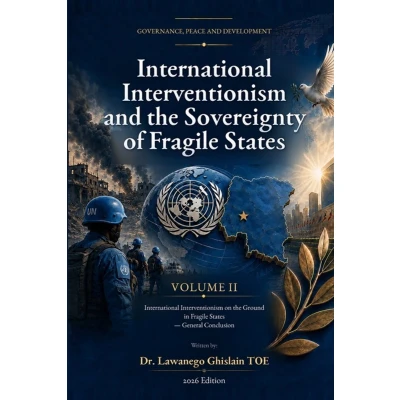
Twenty-five years of UN presence in the Democratic Republic of the Congo, told from the inside. After the theoretical framework laid out in Volume I, this second volume moves onto the ground. It takes MONUSCO as a case study and follows, year by year, one of the longest and most costly peacekeeping operations in United Nations history - from ONUC in 1960 to MONUC, then to MONUSCO and the withdrawal set in motion in 2024. The book opens with a question of definition: what is a fragile state? It sets the criteria of the Crisis States Research Centre against those of the French Development Agency (AFD) and the notion of core-state fragility, then applies them to the Congolese case: the collapse of social cohesion, the institutionalization of poor governance, and the crisis of the justice and security sectors. It then addresses what is often left unsaid. Anti-MONUSCO sentiment: where it comes from, what feeds it, and what the mission failed to explain about its mandate. The confusion kept alive between a support mission and a substitute for the state. Congolese sovereigntism, invoked at times to reclaim control and at other times to shed responsibility. The author shows how sovereignty can become an argument used to legitimize misgovernance. What Volume II covers - The legal framework and the principles of international engagement in fragile states - A detailed chronology of the UN presence in the DRC, from ONUC to MONUSCO - How sovereignty is asserted against intervention: from the right to interfere to the responsibility to protect - Anti-MONUSCO sentiment: causes, effects and manifestations - The methodological difficulties of evaluating a peace mission, and the record from 2010 to 2024 - The withdrawal: chronology, minimum conditions, relevance and the sharing of responsibilities - The general conclusion of the research The author led four MONUSCO regional justice support offices - Ituri, South Kivu, Maniema, North Kivu - in direct contact with civilian and military courts in an active conflict zone. This volume draws from that position material rarely available in the academic literature, and it sidesteps neither the mission's failures nor national responsibilities. Aimed at researchers in international relations and international law, practitioners of peace operations, diplomats and cooperation professionals, it will also interest readers following the Great Lakes crisis. Volume II of a two-volume set. The full general bibliography is reproduced in each volume.
 Prijshistorie
* Prijshistorie bevat geen data van Amazon, Amazon Marketplace.
Prijzen voor het laatst bijgewerkt op:
 Gerelateerde resultaten
 Productspecificaties


