


€ 34,99 Gratis verzending

Uitgelicht
|
|
34,99 |
Naar shop
|
| VERGELIJK ALLE AANBIEDERS (1) | ||
 Beschrijving
Vergelijk aanbieders (1)
€ 34,99 Gratis verzending
Winkels met andere maten
Beschrijving
(1)
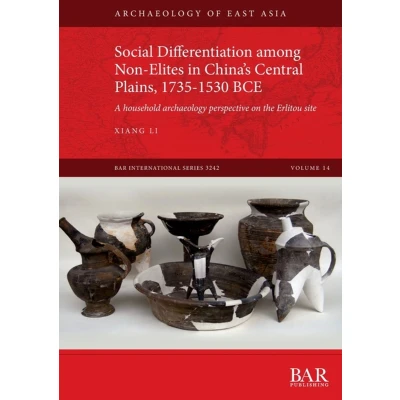
Since its discovery in 1959, research on the Erlitou site has revealed China's first territorial state, dating from 1753 to 1530 BCE according to the latest C-14 dating. The capital's large rammed-earth structures and enclosed inner city suggest strong royal economic and labor-organizing capacities. The southern workshop enclosure housed elite-sponsored crafts like bronze casting and turquoise working. The city's settlement system relied on resource acquisition and tribute. However, existing studies lack focus on internal social complexity, especially bottom-up social differentiation. This book challenges the notion of a homogeneous non-elite class, being the first to study Erlitou society via household archaeology, focusing on non-elite households in the capital. Using multi-dimensional scaling, it uncovers the majority, overshadowed by elites and splendid artifacts, expanding household archaeology's application in China's Bronze Age.
 Productspecificaties
| EAN |
|
|---|---|
| Maat |
|
 Prijshistorie
 Prijzen voor het laatst bijgewerkt op:
 Gerelateerde resultaten


