
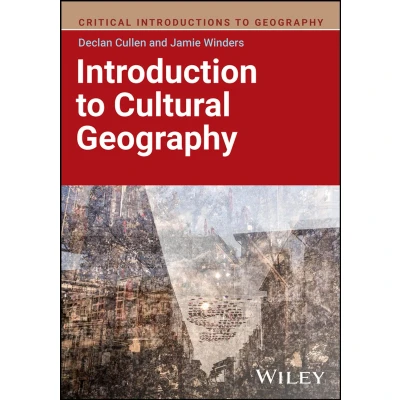
Introduction to Cultural Geography: A Critical Approach
Uitgelicht

|
28,99 |
Naar shop
|
| VERGELIJK ALLE AANBIEDERS (1) | ||
 Beschrijving
Bol
Introduction to Cultural Geography presents a comprehensive foundation to key themes and major theoretical developments relating to the spatial aspects of human culture. Drawing on material from the social sciences and humanities, cultural geography’s relevance becomes apparent for a better understanding of today’s world—and our own lives. Readers will find theoretical and conceptual discussions, contextualization within cultural geography and related disciplines, and illustrative case studies to engage and facilitate a clearer understanding of each topic explored. A number of themes are explored from the role of social media in the production of cultural geographies and cultural politics to the intertwining of spaces of work and leisure, practices of production and social reproduction, in the world around us. Initial chapters develop a conceptual framework for studying cultural geography, followed by coverage of how and where people make and claim place around the world. A final series of chapters addresses key topics in cultural geography, such as cultural formations and diffusion, from newer empirical perspectives. Offering illuminating insights into culture, spaces, and places, Introduction to Cultural Geography reveals the important role of landscape as a shaper and repository of cultural meaning in the world around us. Introduction to Cultural Geography makes the case for why thinking geographically about culture matters. Across its chapters, the book examines how cultural geographers have approached the relationship between geography and culture through topics from house floor plans and international migration to colonialism and digital geographies. The book’s first section develops a conceptual framework for studying cultural geography and its key concepts. From there, its chapters look at how and where people make and claim place across four spheres of our everyday lives: dwelling, moving, working, and playing. The book’s final section addresses debates around materialities, assemblages, and artificial intelligence. Each chapter pairs theoretical engagement with concrete examples that enable readers to apply key concepts to the world around them. Introduction to Cultural Geography: Features topics that resonate with students today, including artificial intelligence, social media, and contemporary cultural politics Presents complex ideas, theories and concepts in an accessible form Covers a wide range of themes such as tourism, memory and heritage, social movements, and pop culture with both historical and contemporary case studies Written with multiple audiences in mind, Introduction to Cultural Geography is a great resource for instructors and scholars seeking a current survey of theoretical debates and a compelling way to help students understand the world around them. Written for both students who are new to cultural geography and scholars already familiar with the field, this book is an essential read for all human geographers.


Vergelijk aanbieders (1)

 Beschrijving
(1)
Beschrijving
(1)
Introduction to Cultural Geography presents a comprehensive foundation to key themes and major theoretical developments relating to the spatial aspects of human culture. Drawing on material from the social sciences and humanities, cultural geography’s relevance becomes apparent for a better understanding of today’s world—and our own lives. Readers will find theoretical and conceptual discussions, contextualization within cultural geography and related disciplines, and illustrative case studies to engage and facilitate a clearer understanding of each topic explored. A number of themes are explored from the role of social media in the production of cultural geographies and cultural politics to the intertwining of spaces of work and leisure, practices of production and social reproduction, in the world around us. Initial chapters develop a conceptual framework for studying cultural geography, followed by coverage of how and where people make and claim place around the world. A final series of chapters addresses key topics in cultural geography, such as cultural formations and diffusion, from newer empirical perspectives. Offering illuminating insights into culture, spaces, and places, Introduction to Cultural Geography reveals the important role of landscape as a shaper and repository of cultural meaning in the world around us. Introduction to Cultural Geography makes the case for why thinking geographically about culture matters. Across its chapters, the book examines how cultural geographers have approached the relationship between geography and culture through topics from house floor plans and international migration to colonialism and digital geographies. The book’s first section develops a conceptual framework for studying cultural geography and its key concepts. From there, its chapters look at how and where people make and claim place across four spheres of our everyday lives: dwelling, moving, working, and playing. The book’s final section addresses debates around materialities, assemblages, and artificial intelligence. Each chapter pairs theoretical engagement with concrete examples that enable readers to apply key concepts to the world around them. Introduction to Cultural Geography: Features topics that resonate with students today, including artificial intelligence, social media, and contemporary cultural politics Presents complex ideas, theories and concepts in an accessible form Covers a wide range of themes such as tourism, memory and heritage, social movements, and pop culture with both historical and contemporary case studies Written with multiple audiences in mind, Introduction to Cultural Geography is a great resource for instructors and scholars seeking a current survey of theoretical debates and a compelling way to help students understand the world around them. Written for both students who are new to cultural geography and scholars already familiar with the field, this book is an essential read for all human geographers.
 Productspecificaties
| EAN |
|
|---|---|
| Maat |
|
 Prijshistorie
Prijzen voor het laatst bijgewerkt op:
 Gerelateerde resultaten


