
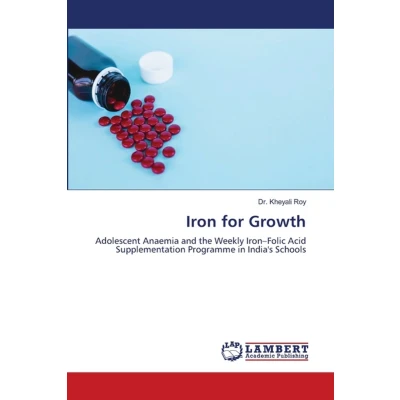
Iron for Growth: Adolescent Anaemia and the Weekly Iron-Folic Acid Supplementation Programme in India's Schools
Uitgelicht

|
47,05 |
Naar shop
|

|
47,05 |
Naar shop
|

|
48,90 |
Naar shop
|
| VERGELIJK ALLE AANBIEDERS (3) | ||
 Beschrijving
Bol
The book begins by contextualising adolescent IDA as one of the most severe yet under-addressed public health emergencies in India. India has the largest population of adolescents worldwide, with over 243 million, and over 56% of adolescent girls and over 30% of adolescent boys are anaemic. These are hardly different from the earlier rounds of the National Family Health Survey (NFHS).Adolescence requires high levels of iron due to the growth that occurs during this period. After the menarche, girls experience an additional loss of blood. However, the typical Indian diet is plant-based and contains high levels of inhibitors of iron absorption, such as phytates from cereals and legumes and polyphenols from tea and coffee, significantly limiting iron absorption. This is worsened by poverty - low-income families do not have the money to buy iron-rich and Vitamin C-rich foods that would help. Social norms also come into play; in many Indian households, women or girls are the last to eat and the least.The repercussions are far-reaching. Iron deficiency affects physical growth, cognitive function, the immune system and academic performance.


 Beschrijving
(2)
Beschrijving
(2)
The book begins by contextualising adolescent IDA as one of the most severe yet under-addressed public health emergencies in India. India has the largest population of adolescents worldwide, with over 243 million, and over 56% of adolescent girls and over 30% of adolescent boys are anaemic. These are hardly different from the earlier rounds of the National Family Health Survey (NFHS).Adolescence requires high levels of iron due to the growth that occurs during this period. After the menarche, girls experience an additional loss of blood. However, the typical Indian diet is plant-based and contains high levels of inhibitors of iron absorption, such as phytates from cereals and legumes and polyphenols from tea and coffee, significantly limiting iron absorption. This is worsened by poverty - low-income families do not have the money to buy iron-rich and Vitamin C-rich foods that would help. Social norms also come into play; in many Indian households, women or girls are the last to eat and the least.The repercussions are far-reaching. Iron deficiency affects physical growth, cognitive function, the immune system and academic performance.
AmazonPagina's: 84, Paperback, LAP LAMBERT Academic Publishing
 Productspecificaties
 Prijshistorie
* Prijshistorie bevat geen data van Amazon, Amazon Marketplace.
Prijzen voor het laatst bijgewerkt op:
 Gerelateerde resultaten


