

€ 25,73 Gratis verzending

Uitgelicht
|
|
25,73 |
Naar shop
|

|
25,73 |
Naar shop
|

|
25,73 |
Naar shop
|
| VERGELIJK ALLE AANBIEDERS (3) | ||
 Beschrijving
Vergelijk aanbieders (3)
€ 25,73 Gratis verzending
€ 25,73 Gratis verzending
€ 25,73 Gratis verzending
Winkels met andere maten
Beschrijving
(1)
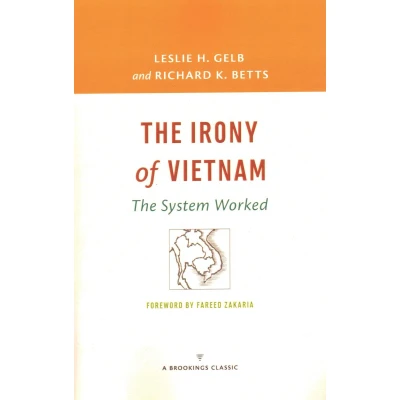
When first published in 1979, The Irony of Vietnam raised eyebrows. The book offers a picture of a steely resolve in government circles that, while useful in creating consensus, did not allow for alternative perspectives. In the years since its publication, The Irony of Vietnam has come to be considered the seminal work on the Vietnam War. When first published in 1979, four years after the end of one of the most divisive conflicts in the United States, The Irony of Vietnam raised eyebrows. Most critics argued that the country had “stumbled into a quagmire in Vietnam through hubris and miscalculation,” as the New York Times put it. But Leslie H. Gelb and Richard K. Betts, who had reviewed recently declassified White House and Defense Department documents, maintained that policymakers in the Kennedy and Johnson administrations had their eyes open, had based decisions on a thorough knowledge of what was possible on the ground, and knew the cost of action and inaction. Explains Fareed Zakaria in his foreword, those prosecuting the war chose “middle-of-the-road solutions,” for a variety of what seemed reasonable assumptions. The overall tenor of the era that shaped foreign policy—the belief in the domino theory and a strident anti-communism—restricted policymakers’ thinking and prevented a more flexible approach, however. And thereby lies a lesson for today's policymakers ""If a historian were allowed but one book on the American involvement in Vietnam, this would be it."" Foreign Affairs When first published in 1979, four years after the end of one of the most divisive conflicts in the United States, The Irony of Vietnam raised eyebrows. Most students of the war argued that the United States had ""stumbled into a quagmire in Vietnam through hubris and miscalculation,"" as the New York Times's Fox Butterfield put it. But the perspective of time and the opening of documentary sources, including the Pentagon Papers, had allowed Gelb and Betts to probe deep into the decisionmaking leading to escalation of military action in Vietnam. The failure of Vietnam could be laid at the door of American foreign policy, they said, but the decisions that led to the failure were made by presidents aware of the risks, clear about their aims, knowledgeable about the weaknesses of their allies, and under no illusion about the outcome.The book offers a picture of a steely resolve in government circles that, while useful in creating consensus, did not allow for alternative perspectives. In the years since its publication, The Irony of Vietnam has come to be considered the seminal work on the Vietnam War.
 Prijshistorie
 * Prijshistorie bevat geen data van Amazon, Amazon Marketplace.
Prijzen voor het laatst bijgewerkt op:
 Gerelateerde resultaten
 Productspecificaties


