
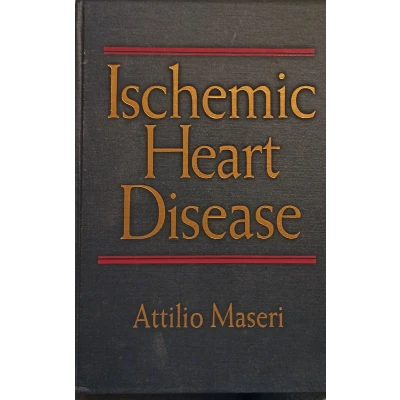
Ischemic Heart Disease
Uitgelicht

|
31,92 |
Naar shop
|
| VERGELIJK ALLE AANBIEDERS (1) | ||
 Beschrijving
Bol Partner
This text provides an overview of the whole field of ischaemic heart disease. It presents clear clinical guidance for cardiologists and general physicians on what ischaemic heart disease really is, how to diagnose it and how to manage it. Basic science is covered from the clinician's point of view. Cardiologists of my generation have witnessed some dramatic progress in the treatment of ischemic syndromes as a result of a more precise understanding of its various pathogenetic mechanisms. However, the same clinical syndrome and even the same pathogenetic mechanism can have different etiologic components and, therefore, the average benefit provided by new forms of treatment may not apply equally to all eligible patients. Identification of the varied etiologic components, genetically and environmentally determined, which concur to cause, or to provide protection from, the various ischemic syndromes, will be a major challenge for the next generation of cardiologists. During the past 25 years of clinical and research activities that have been devoted entirely to patients with ischemic heart disease (IHD), ume and again Í have wrongly disbelieved a patient’s clinical history simply because it did not fit into a traditionally accepted pattern. Thus, in 1984 I began to reexamine thoroughly the generally accepted paradigms about IHD, in an effort to reconcile clinical observations with pathophysiologic, histopathologic and epidemiologic studies. Now, some 10 years later, my work on this book, which is far from perfect, is finished only because my search for a coherent picture of IHD has come to a natural break. Consensus conferences and the results of megatrials are now determining standards of practice for the “average” patient suffering from any given ischemic syndrome, by providing physicians with appropriate guidelines and, at the same time, also providing them with a means of defense against criticism and accusations of malpractise. Yet, until the 1950s, it was standard practise to confine patients with acute myocardial infarction to strict bed rest for 3 weeks, and until as recently as the late 1970s the only “respectable” cause of angina was critical, flow-limiting organic coronary stenoses. The variable relation between risk factors, coronary atherosclerosis, ischemic manifestations and individual responses to treatment, so commonly observed in clinical practice, is due largely to the multiplicity of mechanisms that can cause the same clinical ischemic syndrome. Varied mechanisms of disease imply varying prognoses and varying management strategies: they can be identified only by attentive, open-minded clinical research and, once identified, should be studied in depth at the cellular and molecular levels. As I have tried to provide a rational basis for both clinical practise and clinical research, the book should be read starting from the first, introductory, chapter. The beginning of each chapter and each section outline the most fundamental principles, which, for readers with specific


Vergelijk aanbieders (1)

 Beschrijving
(1)
Beschrijving
(1)
This text provides an overview of the whole field of ischaemic heart disease. It presents clear clinical guidance for cardiologists and general physicians on what ischaemic heart disease really is, how to diagnose it and how to manage it. Basic science is covered from the clinician's point of view. Cardiologists of my generation have witnessed some dramatic progress in the treatment of ischemic syndromes as a result of a more precise understanding of its various pathogenetic mechanisms. However, the same clinical syndrome and even the same pathogenetic mechanism can have different etiologic components and, therefore, the average benefit provided by new forms of treatment may not apply equally to all eligible patients. Identification of the varied etiologic components, genetically and environmentally determined, which concur to cause, or to provide protection from, the various ischemic syndromes, will be a major challenge for the next generation of cardiologists. During the past 25 years of clinical and research activities that have been devoted entirely to patients with ischemic heart disease (IHD), ume and again Í have wrongly disbelieved a patient’s clinical history simply because it did not fit into a traditionally accepted pattern. Thus, in 1984 I began to reexamine thoroughly the generally accepted paradigms about IHD, in an effort to reconcile clinical observations with pathophysiologic, histopathologic and epidemiologic studies. Now, some 10 years later, my work on this book, which is far from perfect, is finished only because my search for a coherent picture of IHD has come to a natural break. Consensus conferences and the results of megatrials are now determining standards of practice for the “average” patient suffering from any given ischemic syndrome, by providing physicians with appropriate guidelines and, at the same time, also providing them with a means of defense against criticism and accusations of malpractise. Yet, until the 1950s, it was standard practise to confine patients with acute myocardial infarction to strict bed rest for 3 weeks, and until as recently as the late 1970s the only “respectable” cause of angina was critical, flow-limiting organic coronary stenoses. The variable relation between risk factors, coronary atherosclerosis, ischemic manifestations and individual responses to treatment, so commonly observed in clinical practice, is due largely to the multiplicity of mechanisms that can cause the same clinical ischemic syndrome. Varied mechanisms of disease imply varying prognoses and varying management strategies: they can be identified only by attentive, open-minded clinical research and, once identified, should be studied in depth at the cellular and molecular levels. As I have tried to provide a rational basis for both clinical practise and clinical research, the book should be read starting from the first, introductory, chapter. The beginning of each chapter and each section outline the most fundamental principles, which, for readers with specific
 Productspecificaties
| EAN |
|
|---|---|
| Maat |
|
 Prijshistorie
Prijzen voor het laatst bijgewerkt op:
 Gerelateerde resultaten


