


€ 139,00 Gratis verzending

Uitgelicht
|
|
139,00 |
Naar shop
|

|
149,79 |
Naar shop
|

|
149,79 |
Naar shop
|
| VERGELIJK ALLE AANBIEDERS (3) | ||
 Beschrijving
Vergelijk aanbieders (3)
€ 139,00 Gratis verzending
€ 149,79 Gratis verzending
€ 149,79 Gratis verzending
Winkels met andere maten
Beschrijving
(1)
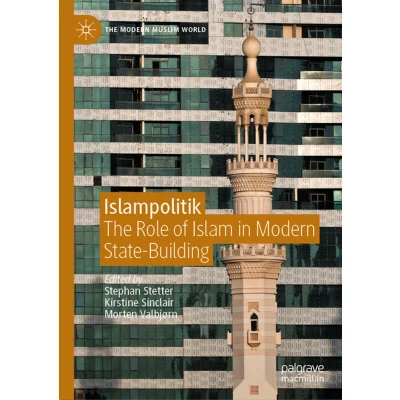
The book provides a needed challenge to the long-held perception amongst scholars of governance and modernity: namely that Islam is a source of pre-modern rationales creating obstacles to modern governance and state maintenance processes. Islampolitik: The Role of Islam in Modern-State Building examines the interrelationship between Islam and state-building in global modernity. Synthesizing scholarship from the fields of sociology, political science, history, religious studies, Middle East, and Islamic studies, this book brings together theories from both below (subjectivities) and above (governance) into one comprehensive resource. Islampolitik investigates how modern states draw on religion, specifically Islam, when creating templates for subjectivity formation of individuals and communities as part of their broader governance strategies. The book provides a needed challenge to the long-held perception amongst scholars of governance and modernity: namely that Islam is a source of pre-modern rationales creating obstacles to modern governance and state maintenance processes. The book provides empirical insights into the connection between global modernity and modern frames for identity construction.
 Prijshistorie
 * Prijshistorie bevat geen data van Amazon, Amazon Marketplace.
Prijzen voor het laatst bijgewerkt op:
 Gerelateerde resultaten
 Productspecificaties


