


gebruikt € 28,00 Gratis verzending

Uitgelicht
|
|
28,00 |
Naar shop
|
| VERGELIJK ALLE AANBIEDERS (1) | ||
 Beschrijving
Vergelijk aanbieders (1)
gebruikt € 28,00 Gratis verzending
Winkels met andere maten
Beschrijving
(1)
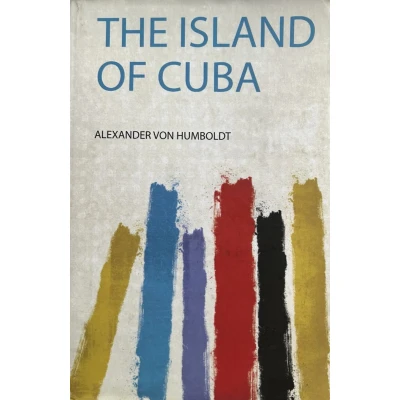
One hundred and fifty years after its publication, this document remains an important source for the study of 19th-century Cuba and especially of slavery in the Caribbean. Baron Alexander von Humboldt’s travelogue, The Island of Cuba, is a snap shot of life on Cuba within its international, socio-historical context during the nineteenth century. His descriptive and critical analysis of the island paints the picture of a tropical paradise with a complex social structure that is a byproduct of its diverse population and the external pressure of foreign intervention in domestic politics. A Prussian natural scientist who was world-renowned for his brilliance and scholarship, Humboldt arrived in Cuba in 1800 and applied his scientific methods to describing the social and political atmosphere of the island. He uses both qualitative and quantitative data to describe the geographic location, economy, racial makeup, and political hierarchy that make Cuba a unique colony among all the other Caribbean territories. From his accounts, modern readers can posit Cuba as a nexus of the sweeping changes that the world was undergoing at this time due to European colonization and advances in transportation and communication technologies. What Humboldt was witnessing on Cuba were the very beginnings of what we now know as the modern era. By reading these accounts of Cuba from Humboldt’s perspective, we can see how enlightened early nineteenth century thinkers began to look at their world through an increasingly critical and scientific lens. Humboldt presents his most compelling descriptions of Cuba in his accounts on the nature of slavery and race on the island. Though he admires the island for its natural beauty and its culture, he denounces slavery as an evil system that permeates and tarnishes Cuba. When questioning how such a horrible practice could continue in Cuba, where educated and civilized white men dominate the power circles, Humboldt suggests that fear of a slave revolt such as the one in Haiti “undoubtedly operates more powerfully upon the minds of men, than do the principles of humanity and justice” (186). Humboldt wonders how such a contradiction could exist in the minds of educated and “enlightened” men and postulates that the issue of slavery will eventually be resolved on its own as a result of sociological forces. Humboldt is optimistic that the atrocity of slavery will one day recede into the depths of Cuban history, but not without significant social action. In one of the most interesting examples of his efforts to translate knowledge as a natural scientist into the language of a social scientist, he notes: To remedy the evil, to prevent public calamities, and to console the unfortunate beings who belong to an ill-treated race, and who are feared more than acknowledged, it is necessary to probe the sore; for there exists in social, as well as organic bodies, reparative forces, which, when well directed, may triumph over the most inveterate evils (190). Humboldt compares the society of Cuba to an organic body that is capable of healing itself only if the right action takes place. Here, Humboldt assumes a slightly more activist stance, suggesting that steps should be taken to stop the perpetuation of the status quo on the island.
 Productspecificaties
| EAN |
|
|---|---|
| Maat |
|
 Gerelateerde resultaten


