


€ 64,26 Gratis verzending

Gesponsorde links
|
|
64,26 |
Naar shop
|

|
69,32 |
Naar shop
|

|
69,32 |
Naar shop
|
| VERGELIJK ALLE AANBIEDERS (3) | ||
 Beschrijving
Vergelijk aanbieders (3)
Gesponsorde links · Sommige shops betalen ons een vergoeding
€ 64,26 Gratis verzending
€ 69,32 Gratis verzending
€ 69,32 Gratis verzending
Winkels met andere maten
Beschrijving
(1)
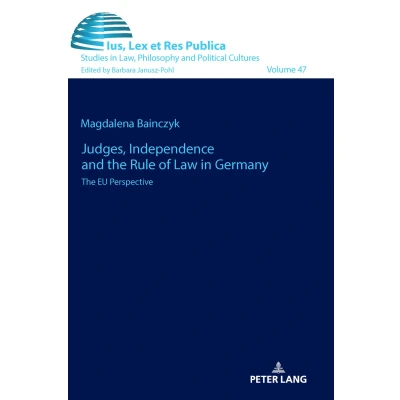
The analysis of federal and selected Länder regulations governing the legal status of judges in Germany, together with examples of their application and assessments by EU institutions, will enable readers to gain insight not only into the German legal system but also into the EU mechanism for monitoring compliance with the rule of law. Germany’s judiciary is rooted in long-standing institutional traditions that took shape in the final decades of the nineteenth century. One of its defining features is the prominent role played by the federal and Land Ministers of Justice in the administration of the courts. For many years, the German judicial system attracted limited scrutiny from EU institutions and was often treated as a point of reference. But is this reputation fully justified? This book offers a comprehensive analysis of federal legislation and selected Länder regulations supported by examples of their application. It considers the assessments formulated by EU institutions, including the case law of the CJEU and the European Commission’s rule of law report. The study enables readers to explore both the strengths and the weaknesses of the German model. At the same time, it provides a broader insight into the mechanisms through which the EU monitors member states’ compliance with the rule of law.
 Prijshistorie
* Prijshistorie bevat geen data van Amazon, Amazon Marketplace.
Prijzen voor het laatst bijgewerkt op:
 Gerelateerde resultaten
 Productspecificaties


