


€ 98,60 Gratis verzending

Uitgelicht
|
|
98,60 |
Naar shop
|

|
109,09 |
Naar shop
|

|
109,09 |
Naar shop
|
| VERGELIJK ALLE AANBIEDERS (3) | ||
 Beschrijving
Vergelijk aanbieders (3)
€ 98,60 Gratis verzending
€ 109,09 Gratis verzending
€ 109,09 Gratis verzending
Winkels met andere maten
Beschrijving
(1)
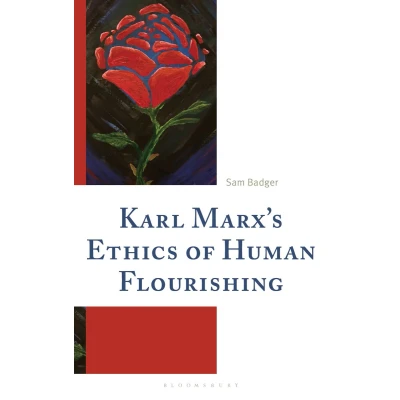
How did Marx’s moral views inform his critique of capitalism? This book argues that Marx developed an ethic of human flourishing that resembles but also diverges from Aristotle’s How did Karl Marx’s moral views inform his views on capitalism? This book argues that Marx developed an ethic of character development and human flourishing that resembles but also diverges from Aristotle’s, taking a critical attitude toward reified hierarchies. Marx’s derisive writings about “moralism” and “moralists” have often been read as a rejection of the value of moral and ethical reasoning, but Karl Marx’s Ethics of Human Flourishing shows how the ethical problems Marx mentions function as a totality. Unlike Aristotle, for whom human flourishing was reserved for the elite, Marx draws from Hegel and later Darwin to argue that the function of human nature is influenced by historical context and class status: humans remake their world and themselves through their labor. His early work focuses on alienation and its deleterious effect on individual development, freedom, and wellbeing, while his later works elaborate on this through his theory of exploitation. This leads Marx to endorse the moral position of the working class in favor of shortening the working day, increasing wages, and improving labor conditions with an eye to abolishing capitalist labor relations altogether. Marx’s approach to ethics can provide a useful basis for current social movements that are concerned with overcoming economic and social inequalities and alienated social conditions.
 Prijshistorie
 * Prijshistorie bevat geen data van Amazon, Amazon Marketplace.
Prijzen voor het laatst bijgewerkt op:
 Gerelateerde resultaten
 Productspecificaties


