


€ 105,00 Gratis verzending

Uitgelicht
|
|
105,00 |
Naar shop
|
| VERGELIJK ALLE AANBIEDERS (1) | ||
 Beschrijving
Vergelijk aanbieders (1)
€ 105,00 Gratis verzending
Winkels met andere maten
Beschrijving
(1)
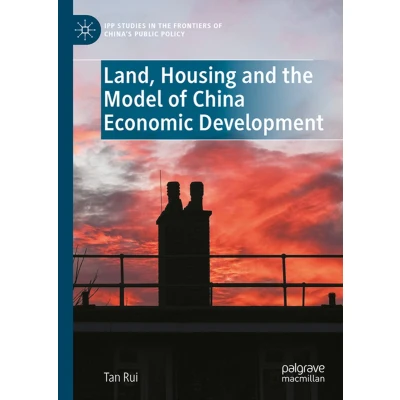
The first part elaborates the relationship between the real estate sector and urban economy and explains the mechanism of the former’s impact on the later. The real estate sector is an essential part of China’s model of economic development, so this book will interest those readers who want to know the Chinese miracle of growth. This book explores the roles of land and housing in the China economic development. The real estate sector in China has two opposite effects on the urban economy. On one hand, it provides funds for urban development and on the other hand, its excessive expansion would depress the urban growth. To balance the two effects, the governments try to adjust their regulation policies dynamically. These policies to a great extent determine the rise and fall of urban economy. This book is divided in to four parts. The first part elaborates the relationship between the real estate sector and urban economy and explains the mechanism of the former’s impact on the later. The second part investigates the interaction of the real estate sector and the industrial sector and the consequences. The third part discusses the real estate tax reform and the affordable housing system. At the last part, I discuss the prospect of China real estate economy through the case of Evergrand’s debt crisis. The real estate sector is an essential part of China’s model of economic development, so this book will interest those readers who want to know the Chinese miracle of growth. Tan Rui is an associate professor at the School of Public Administration, Guangdong University of Foreign Studies, Guangzhou, P. R. C. He was a research fellow at Institute of Public Policy, South China University of Technology, during 2014-2023. He earned his PhD in economics in Sun Yat-Sen University, Guangzhou. His research interest focuses on urban economics, comparative political economics, and industrial policy. He has published some books on these topics, includng The Model of China Economic Development: from the Perspectives of the History and the World (Hong Kong, 2024), Industrial Policy in China: Trend and Change (Beijing, 2023), The Division of Labour among Cities in Guangdong-Hong Kong-Macao Greater Bay Area (Guangzhou, 2023). This book explores the roles of land and housing in the China economic development. The real estate sector in China has two opposite effects on the urban economy. On one hand, it provides funds for urban development and on the other hand, its excessive expansion would depress the urban growth. To balance the two effects, the governments try to adjust their regulation policies dynamically. These policies to a great extent determine the rise and fall of urban economy. This book is divided in to four parts. The first part elaborates the relationship between the real estate sector and urban economy and explains the mechanism of the former’s impact on the later. The second part investigates the interaction of the real estate sector and the industrial sector and the consequences. The third part discusses the real estate tax reform and the affordable housing system. At the last part, I discuss the prospect of China real estate economy through the case of Evergrand’s debt crisis. The real estate sector is an essential part of China’s model of economic development, so this book will interest those readers who want to know the Chinese miracle of growth.
 Productspecificaties
| EAN |
|
|---|---|
| Maat |
|
 Prijshistorie
 Prijzen voor het laatst bijgewerkt op:
 Gerelateerde resultaten


