


€ 153,00 Gratis verzending

Uitgelicht
|
|
153,00 |
Naar shop
|

|
230,02 |
Naar shop
|
| VERGELIJK ALLE AANBIEDERS (2) | ||
 Beschrijving
Vergelijk aanbieders (2)
€ 153,00 Gratis verzending
€ 230,02 € 8,09 verzendkosten Totaal € 238,11
Winkels met andere maten
Beschrijving
(1)
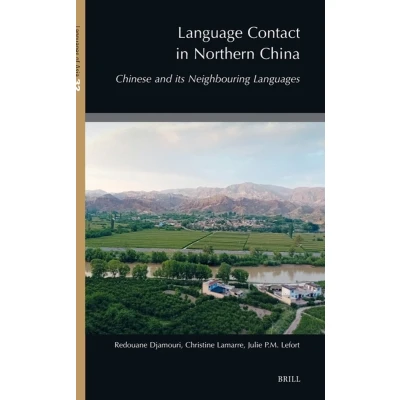
This volume offers ground-breaking insights into how sustained multilingual contact in Northern China has shaped the grammar of both Sinitic and, to a lesser extent, Mongolic languages, highlighting the role of typological restructuring in the evolution of linguistic diversity and change. What happens when Chinese is shaped by centuries of contact with Mongolic, Tungusic, Turkic, and Tibetic languages? This volume explores this question through striking case studies of lects like Tangwang and Wutun, where Chinese exhibits unexpected features such as OV word order, case suffixes, and restructured verbal morphology. Drawing on rare fieldwork data, this volume reveals how deep multilingual interaction transforms grammatical systems. It offers a unique contribution to the study of language change, typology, and contact linguistics—essential reading for anyone interested in how languages evolve in complex sociolinguistic environments.
 Prijshistorie
 * Prijshistorie bevat geen data van Amazon.
Prijzen voor het laatst bijgewerkt op:
 Gerelateerde resultaten
 Productspecificaties


