
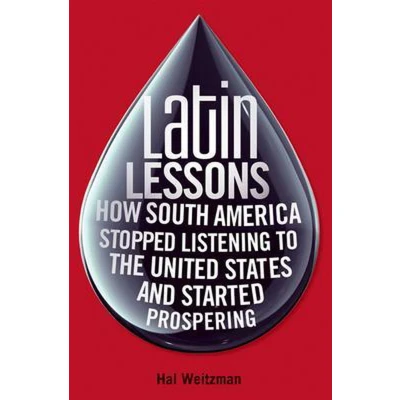
Latin Lessons
Uitgelicht

|
14,50 |
Naar shop
|
| VERGELIJK ALLE AANBIEDERS (1) | ||
 Beschrijving
Bol Partner
Latin LessonsIn recent years, the U.S. economy has fallen on hard times, with persistently high unemployment, stagnant wages, and a fast-expanding national debt burden. At the same time, South America has been booming, with rapid economic growth, falling unemployment rates, and decreasing indebtedness. Is it possible that instead of telling Latin America what to do, the U.S. should be following their lead? In Latin Lessons, Financial Times correspondent Hal Weitzman explains how, after many decades of destructive political and military interference and disastrous economic and trade policies, many South American countries have had enough of the American way of doing things. Thanks to demand from big emerging economies, which has caused commodity prices to surge and cash to flow into the continent, most South American governments have become increasingly "resource nationalistic" and have ramped up social spending to meet the needs of the poor and the indigenous, causing poverty levels to drop¿at the same time as poverty has been on the increase in the United States. Over the past ten years, Weitzman reveals, most of South America has been turning away from Western-style globalization and toward more resource nationalism. Previously impoverished Latin American states such as Peru and Bolivia have found eager partners in the emerging economic powers of China and India¿which are willing to pay a premium for oil, metals, and agricultural commodities¿as well as Russia and Iran. While the U.S. military is deeply concerned about Iranian involvement, especially with Hugo Chávez's Venezuela, it is the widespread, vast, and growing commercial presence of China that is eroding America's dominance in the region.Weitzman punctuates his trenchant analysis with sharp wit and remarkably entertaining and revealing stories. He traces a path from the hilarious flap over Bolivian president Evo Morales's fondness for a red, white, and blue sweater to the broader themes of South American nationalism, the transfer of power from elites to populist leaders, and governments' increasing focus on the needs of the poor rather than the demands of the wealthy. This puts them in direct opposition with policies the United States has been advocating for decades.Is the United States doomed to continue losing influence in Latin America? Will China soon come to dominate the area both commercially and strategically? Can America find a way to do business with countries from Mexico to Argentina without interfering in their internal affairs? Read Latin Lessons and find out.


Vergelijk aanbieders (1)

 Beschrijving
(1)
Beschrijving
(1)
Latin LessonsIn recent years, the U.S. economy has fallen on hard times, with persistently high unemployment, stagnant wages, and a fast-expanding national debt burden. At the same time, South America has been booming, with rapid economic growth, falling unemployment rates, and decreasing indebtedness. Is it possible that instead of telling Latin America what to do, the U.S. should be following their lead? In Latin Lessons, Financial Times correspondent Hal Weitzman explains how, after many decades of destructive political and military interference and disastrous economic and trade policies, many South American countries have had enough of the American way of doing things. Thanks to demand from big emerging economies, which has caused commodity prices to surge and cash to flow into the continent, most South American governments have become increasingly "resource nationalistic" and have ramped up social spending to meet the needs of the poor and the indigenous, causing poverty levels to drop¿at the same time as poverty has been on the increase in the United States. Over the past ten years, Weitzman reveals, most of South America has been turning away from Western-style globalization and toward more resource nationalism. Previously impoverished Latin American states such as Peru and Bolivia have found eager partners in the emerging economic powers of China and India¿which are willing to pay a premium for oil, metals, and agricultural commodities¿as well as Russia and Iran. While the U.S. military is deeply concerned about Iranian involvement, especially with Hugo Chávez's Venezuela, it is the widespread, vast, and growing commercial presence of China that is eroding America's dominance in the region.Weitzman punctuates his trenchant analysis with sharp wit and remarkably entertaining and revealing stories. He traces a path from the hilarious flap over Bolivian president Evo Morales's fondness for a red, white, and blue sweater to the broader themes of South American nationalism, the transfer of power from elites to populist leaders, and governments' increasing focus on the needs of the poor rather than the demands of the wealthy. This puts them in direct opposition with policies the United States has been advocating for decades.Is the United States doomed to continue losing influence in Latin America? Will China soon come to dominate the area both commercially and strategically? Can America find a way to do business with countries from Mexico to Argentina without interfering in their internal affairs? Read Latin Lessons and find out.
 Productspecificaties
| EAN |
|
|---|---|
| Maat |
|
 Prijshistorie
Prijzen voor het laatst bijgewerkt op:
 Gerelateerde resultaten


