








Lectures on the Proofs of Existence God
Uitgelicht

|
0,91 |
Naar shop
|
 Beschrijving
Bol
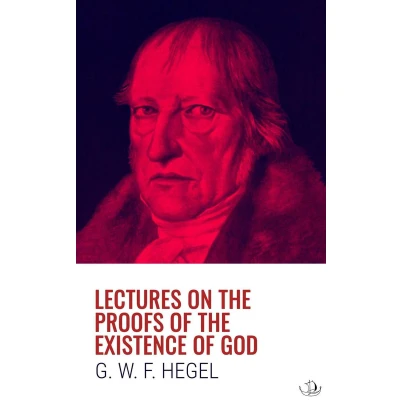
Hegel's Lectures on the Proofs of the Existence of God outlines his ideas on Christianity as a form of self-consciousness. They represent the final and in some ways the decisive element of his philosophical system. In light of his distinctive philosophical approach, using a method that is dialectical and historical, Hegel offers a radical reinterpretation of the meaning of Christianity and its characteristic doctrines. The approach taken in these lectures is to some extent prefigured in Hegel's first published book, The Phenomenology of Spirit (1807). Hegel's principal achievement was his development of a distinctive articulation of idealism, sometimes termed absolute idealism, in which the dualisms of, for instance, mind and nature and subject and object are overcome. His philosophy of spirit conceptually integrates psychology, the state, history, art, religion and philosophy. His account of the master–slave dialectic has been influential, especially in 20th-century France. Of special importance is his concept of spirit (Geist, sometimes also translated as "mind") as the historical manifestation of the logical concept – and the "sublation" (Aufhebung, integration without elimination or reduction) – of seemingly contradictory or opposing factors: examples include the apparent opposition between necessity and freedom and between immanence and transcendence. Hegel has been seen in the twentieth century as the originator of the thesis, antithesis, synthesis triad, but as an explicit phrase it originated with Johann Gottlieb Fichte. Kant bases his account of reason on a table of judgments inspired by Aristotelian syllogistic or term logic. It is from this table that Kant derives in turn his table of categories, the twelve pure concepts of the understanding that structure all experience irrespective of its content. Hegel thinks that Kant's account is quite accurate; however, he faults Kant for proceeding to derive the table of categories without first deriving the table of judgments. Kant's transcendental logic is consequently rendered historically contingent, having been reconstructed from the "modern compendiums of logic" whose subject matter is in need of "total reconstruction." Concepts such as universality and necessity, and laws such as non-contradiction, are simply taken for granted by Kant––they do in fact hold for thinking as Kant says, Hegel thinks, but philosophy demands that they be given a genetic (i.e. dialectical) derivation. Providing such a derivation is Hegel's aim in the Science of Logic.


Vergelijk aanbieders (1)

 Beschrijving
(1)
Beschrijving
(1)
Hegel's Lectures on the Proofs of the Existence of God outlines his ideas on Christianity as a form of self-consciousness. They represent the final and in some ways the decisive element of his philosophical system. In light of his distinctive philosophical approach, using a method that is dialectical and historical, Hegel offers a radical reinterpretation of the meaning of Christianity and its characteristic doctrines. The approach taken in these lectures is to some extent prefigured in Hegel's first published book, The Phenomenology of Spirit (1807). Hegel's principal achievement was his development of a distinctive articulation of idealism, sometimes termed absolute idealism, in which the dualisms of, for instance, mind and nature and subject and object are overcome. His philosophy of spirit conceptually integrates psychology, the state, history, art, religion and philosophy. His account of the master–slave dialectic has been influential, especially in 20th-century France. Of special importance is his concept of spirit (Geist, sometimes also translated as "mind") as the historical manifestation of the logical concept – and the "sublation" (Aufhebung, integration without elimination or reduction) – of seemingly contradictory or opposing factors: examples include the apparent opposition between necessity and freedom and between immanence and transcendence. Hegel has been seen in the twentieth century as the originator of the thesis, antithesis, synthesis triad, but as an explicit phrase it originated with Johann Gottlieb Fichte. Kant bases his account of reason on a table of judgments inspired by Aristotelian syllogistic or term logic. It is from this table that Kant derives in turn his table of categories, the twelve pure concepts of the understanding that structure all experience irrespective of its content. Hegel thinks that Kant's account is quite accurate; however, he faults Kant for proceeding to derive the table of categories without first deriving the table of judgments. Kant's transcendental logic is consequently rendered historically contingent, having been reconstructed from the "modern compendiums of logic" whose subject matter is in need of "total reconstruction." Concepts such as universality and necessity, and laws such as non-contradiction, are simply taken for granted by Kant––they do in fact hold for thinking as Kant says, Hegel thinks, but philosophy demands that they be given a genetic (i.e. dialectical) derivation. Providing such a derivation is Hegel's aim in the Science of Logic.
 Productspecificaties
| EAN |
|
|---|---|
| Maat |
|
 Prijshistorie
Prijzen voor het laatst bijgewerkt op:
 Gerelateerde resultaten


