


€ 139,00 Gratis verzending

Uitgelicht
|
|
139,00 |
Naar shop
|
| VERGELIJK ALLE AANBIEDERS (1) | ||
 Beschrijving
Vergelijk aanbieders (1)
€ 139,00 Gratis verzending
Winkels met andere maten
Beschrijving
(1)
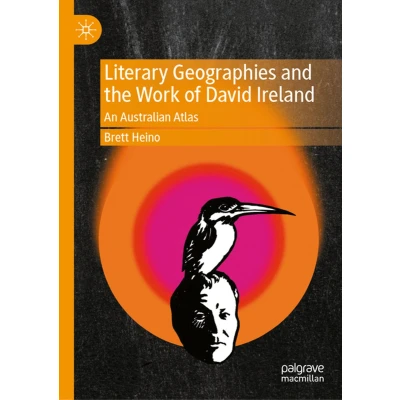
In particular, Ireland’s works ideologically handle the contradictory relationship between capitalism’s regime of abstract space, rooted in the production process and the state, and the meaningful social places that can be forged out of the struggle of social forces including workers, lumpenproletarians, women and indigenous peoples. This book explores the spatiality of post-World War II Australian society through the vehicle of David Ireland’s literature. Employing concepts from radical geography and structural Marxist literary theory, it posits the existence of a spatial unconscious of literary texts, whereby they encode the spatiality of the society into which they are born. By mining the spatial unconscious of Ireland’s texts, we can create a complex, unique and highly fertile atlas of the spaces and places of Australia. In particular, Ireland’s works ideologically handle the contradictory relationship between capitalism’s regime of abstract space, rooted in the production process and the state, and the meaningful social places that can be forged out of the struggle of social forces including workers, lumpenproletarians, women and indigenous peoples. In the midst of the contemporary spatial crisis, this study of Ireland is a form of mapping, creating an atlas by which we might plot our past and present and orient ourselves to the future. Brett Heino is a legal scholar and historian in the Law Faculty at the University of Technology Sydney, Australia. His research interests include literary geography, the political economy of labour law, and the legal and spatial structure of post-World War II Australian capitalism. He is the author of two books: Regulation Theory and Australian Capitalism: Rethinking Social Justice and Labour Law (2017) and Space, Place and Capitalism: The Literary Geographies of The Unknown Industrial Prisoner (2021). He has also published articles in leading journals, including Political Geography, Environment & Planning E, Labour History and the Journal of Australian Political Economy. This book explores the spatiality of post-World War II Australian society through the vehicle of David Ireland’s literature. Employing concepts from radical geography and structural Marxist literary theory, it posits the existence of a spatial unconscious of literary texts, whereby they encode the spatiality of the society into which they are born. By mining the spatial unconscious of Ireland’s texts, we can create a complex, unique and highly fertile atlas of the spaces and places of Australia. In particular, Ireland’s works ideologically handle the contradictory relationship between capitalism’s regime of abstract space, rooted in the production process and the state, and the meaningful social places that can be forged out of the struggle of social forces including workers, lumpenproletarians, women and indigenous peoples. In the midst of the contemporary spatial crisis, this study of Ireland is a form of mapping, creating an atlas by which we might plot our past and present and orient ourselves to the future.
 Productspecificaties
| EAN |
|
|---|---|
| Maat |
|
 Prijshistorie
 Prijzen voor het laatst bijgewerkt op:
 Gerelateerde resultaten


