


€ 18,99 Gratis verzending

Uitgelicht
|
|
18,99 |
Naar shop
|

|
26,16 |
Naar shop
|
| VERGELIJK ALLE AANBIEDERS (2) | ||
 Beschrijving
Vergelijk aanbieders (2)
€ 18,99 Gratis verzending
gebruikt € 26,16 Gratis verzending
Winkels met andere maten
Beschrijving
(2)
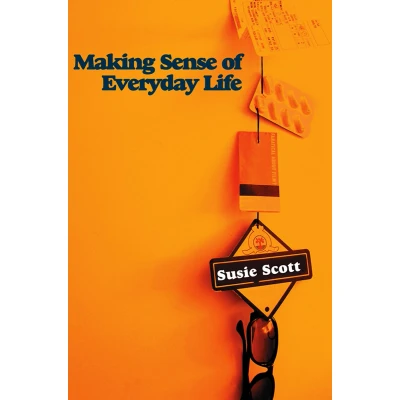
Student-friendly introduction to the sociology of everyday life. Introduces in very accessible style the various theories used to interpret our everyday actions that on the surface of things might look mundane. Considers topics such as eating and drinking, leisure, time and schedules, emotions, home, as well as how to study everyday life. This accessible, introductory text explains the importance of studying ‘everyday life’ in the social sciences. Susie Scott examines such varied topics as leisure, eating and drinking, the idea of home, and time and schedules in order to show how societies are created and reproduced by the apparently mundane ‘micro’ level practices of everyday life. Each chapter is organized around three main themes: ‘rituals and routines', ‘social order', and ‘challenging the taken-for-granted', with intriguing examples and illustrations. Theoretical approaches from ethnomethodology, Symbolic Interactionism and social psychology are introduced and applied to real-life situations, and there is clear emphasis on empirical research findings throughout. Social order depends on individuals following norms and rules which are so familiar as to appear natural; yet, as Scott encourages the reader to discover, these are always open to question and investigation. This user-friendly book will appeal to undergraduate students across the social sciences, including the sociology of everyday life, the sociology of emotions, social psychology and cultural studies, and will reveal the fascinating significance our everyday habits hold. This accessible, introductory text explains the importance of studying 'everyday life' in the social sciences. Susie Scott examines such varied topics as leisure, eating and drinking, the idea of home, and time and schedules in order to show how societies are created and reproduced by the apparently mundane 'micro' level practices of everyday life. Each chapter is organized around three main themes: 'rituals and routines', 'social order', and 'challenging the taken-for-granted', with intriguing examples and illustrations. Theoretical approaches from ethnomethodology, Symbolic Interactionism and social psychology are introduced and applied to real-life situations, and there is clear emphasis on empirical research findings throughout. Social order depends on individuals following norms and rules which are so familiar as to appear natural; yet, as Scott encourages the reader to discover, these are always open to question and investigation. This user-friendly book will appeal to undergraduate students across the social sciences, including the sociology of everyday life, the sociology of emotions, social psychology and cultural studies, and will reveal the fascinating significance our everyday habits hold.
BolThis accessible, introductory text explains the importance of studying 'everyday life' in the social sciences. Susie Scott examines such varied topics as leisure, eating and drinking, the idea of home, and time and schedules in order to show how societies are created and reproduced by the apparently mundane 'micro' level practices of everyday life. Each chapter is organized around three main themes: 'rituals and routines', 'social order', and 'challenging the taken-for-granted', with intriguing examples and illustrations. Theoretical approaches from ethnomethodology, Symbolic Interactionism and social psychology are introduced and applied to real-life situations, and there is clear emphasis on empirical research findings throughout. Social order depends on individuals following norms and rules which are so familiar as to appear natural; yet, as Scott encourages the reader to discover, these are always open to question and investigation. This user-friendly book will appeal to undergraduate students across the social sciences, including the sociology of everyday life, the sociology of emotions, social psychology and cultural studies, and will reveal the fascinating significance our everyday habits hold.
 Productspecificaties
| EAN |
|
|---|---|
| Maat |
|
 Prijshistorie
 Prijzen voor het laatst bijgewerkt op:
 Gerelateerde resultaten


