
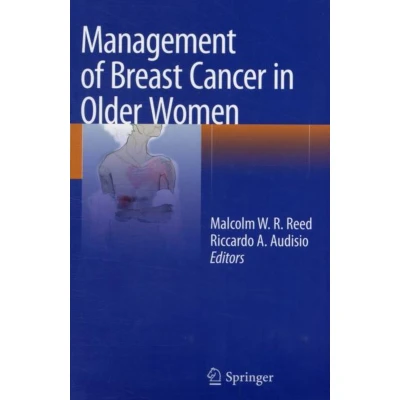
Management of Breast Cancer in Older Women
Uitgelicht

|
26,63 |
Naar shop
|
| VERGELIJK ALLE AANBIEDERS (1) | ||
 Beschrijving
Bol Partner
I was looking at Mrs T - all 45 kilos of her - with somewhat puzzled thoughts. I had prescribed her capecitabine at very prudent doses, in view of her 91-year-old kidneys and physiology. She had reduced my treatment even further, because it was making her tired. As a result, she was taking a grand total of 500 mg of capecitabine a day. Yet, her metastatic, ER/PR-negative, Her2-positive breast cancer was undoubtedly responding. Her pain was improving and her chest mass was shrinking, as were her lung metastases... What was the secret of that response? Were Mrs T's kidneys eli- nating even less drug than predicted by her creatinine clearance? Was her sarcopenia altering drug distribution? Was she absorbing more drug than average? Or was her tumor exquisitely sensitive to fluoropyrimidines? Physicians, said Voltaire, pour drugs they know little for diseases they know even less into patients they know no- ing about. Medicine has made tremendous progress since the eighteenth century. Yet, there are fields where quite a lot remains to be learned. In developed countries, 25% of breast cancers occur in patients aged 75 years and older. Yet, these patients represent only 4% of the population of traditional clinical trials. That ought to let us wonder how relevant data acquired in patients in their 60s are to a nonagenarian. Fortunately, geriatric oncologists have been stepping up to the task and have gen- ated data to help us to treat such patients.


Vergelijk aanbieders (1)

 Beschrijving
(1)
Beschrijving
(1)
I was looking at Mrs T - all 45 kilos of her - with somewhat puzzled thoughts. I had prescribed her capecitabine at very prudent doses, in view of her 91-year-old kidneys and physiology. She had reduced my treatment even further, because it was making her tired. As a result, she was taking a grand total of 500 mg of capecitabine a day. Yet, her metastatic, ER/PR-negative, Her2-positive breast cancer was undoubtedly responding. Her pain was improving and her chest mass was shrinking, as were her lung metastases... What was the secret of that response? Were Mrs T's kidneys eli- nating even less drug than predicted by her creatinine clearance? Was her sarcopenia altering drug distribution? Was she absorbing more drug than average? Or was her tumor exquisitely sensitive to fluoropyrimidines? Physicians, said Voltaire, pour drugs they know little for diseases they know even less into patients they know no- ing about. Medicine has made tremendous progress since the eighteenth century. Yet, there are fields where quite a lot remains to be learned. In developed countries, 25% of breast cancers occur in patients aged 75 years and older. Yet, these patients represent only 4% of the population of traditional clinical trials. That ought to let us wonder how relevant data acquired in patients in their 60s are to a nonagenarian. Fortunately, geriatric oncologists have been stepping up to the task and have gen- ated data to help us to treat such patients.
 Productspecificaties
| EAN |
|
|---|---|
| Maat |
|
 Prijshistorie
Prijzen voor het laatst bijgewerkt op:
 Gerelateerde resultaten


