

€ 47,15 Gratis verzending

Uitgelicht
|
|
47,15 |
Naar shop
|

|
47,75 |
Naar shop
|

|
48,90 |
Naar shop
|
| VERGELIJK ALLE AANBIEDERS (3) | ||
 Beschrijving
Vergelijk aanbieders (3)
€ 47,15 Gratis verzending
€ 47,75 Gratis verzending
€ 48,90 Gratis verzending
Winkels met andere maten
Beschrijving
(1)
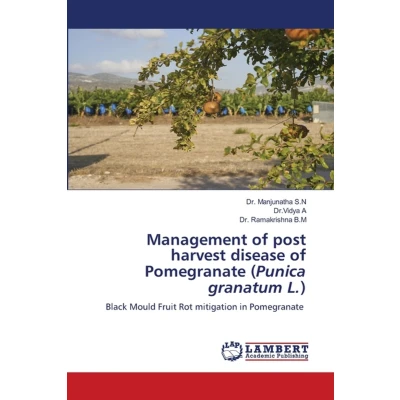
A fortnightly survey of fruit markets in Bengaluru, Tumkuru, Shimoga and Chitradurga from November-December 2015 to March-April 2016 revealed black mould rot of pomegranate throughout the survey period. The disease incidence was highest in April (12.48%) and lowest in January (4.44%). Epidemiological studies showed that fruit injury was essential for infection, as fruits inoculated without injury did not develop symptoms. All wounded fruits developed rot, with cork-wounding being the most effective inoculation method. Infection occurred at unripe, semi-ripe and ripe stages, with maximum severity at the ripe stage. Temperature and relative humidity influenced disease development, with lowest incidence at 0°C and highest at 30°C. Disease severity was lowest at 50% relative humidity and increased up to 100%. Post-harvest treatments such as hot water dipping (40±1°C to 50±1°C for 10 minutes), fungicides, oils and food preservatives effectively reduced rot severity. Bavistin (0.1%), Indofil M-45 (0.2%), Captan (0.2%), castor oil (0.4%), neem oil (4.0%), potassium metabisulphite (0.5%) and sodium benzoate (0.5%) were effective in reducing infection and maintaining fruit quality.
 Prijshistorie
 * Prijshistorie bevat geen data van Amazon Marketplace, Amazon.
Prijzen voor het laatst bijgewerkt op:
 Gerelateerde resultaten
 Productspecificaties


