


€ 51,99 Gratis verzending

Uitgelicht
|
|
51,99 |
Naar shop
|

|
53,49 |
Naar shop
|

|
53,49 |
Naar shop
|
| VERGELIJK ALLE AANBIEDERS (3) | ||
 Beschrijving
Vergelijk aanbieders (3)
€ 51,99 Gratis verzending
€ 53,49 Gratis verzending
€ 53,49 Gratis verzending
Winkels met andere maten
Beschrijving
(1)
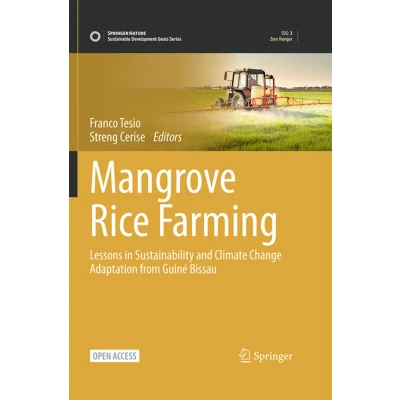
This open access book examines the central role of rice in Guinea-Bissau, where per capita consumption is estimated at 100–120 kg per year and rice provides more than half of both caloric and protein intake. It explores how this high dependence shapes livelihoods, food systems, and social practices, while situating current conditions within a longer-term transformation of the sector. Over the past fifty years, Guinea-Bissau has shifted from a net exporter to a net importer, now relying on more than 60,000 tons of milled rice annually. Rice also functions as a medium of exchange, including within the cashew sector. Rice is produced in three ecosystems: rainfed uplands, lowlands, and mangrove swamps. Mangrove cultivation relies on reclaimed coastal land protected by dykes, which regulate seawater entry and support soil desalinization. Seasonal saline inundation contributes to nutrient supply, weed control, and soil management, although water regulation remains limited. This book examines interventions to support mangrove rice systems, including varietal improvement based on local biodiversity, farmer-managed seed systems, and enhanced hydraulic design through a basin-level approach. It also addresses efforts to improve milling efficiency while preserving nutritional value. Drawing on contributions from multiple institutions, the volume presents results from initiatives supported by the European Union and situates technical developments within the broader socio-economic and cultural context of rice in Guinea-Bissau.
 Prijshistorie
 * Prijshistorie bevat geen data van Amazon, Amazon Marketplace.
Prijzen voor het laatst bijgewerkt op:
 Gerelateerde resultaten
 Productspecificaties


